Exploring the Dimensions and Apocalyptic Nature of the 12-Day War
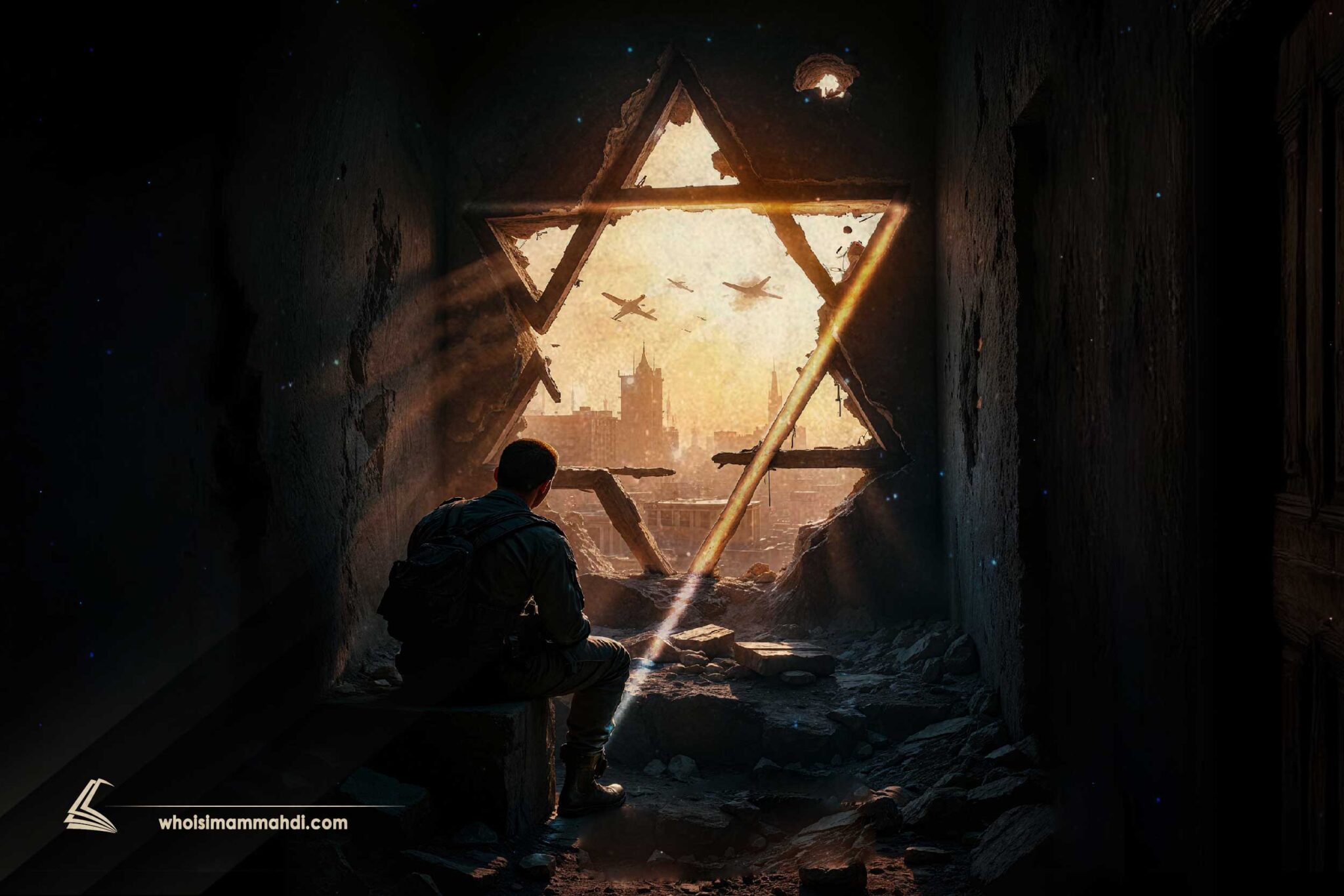
At a time when many analysts believed a new chapter of diplomacy was opening between Iran and the United States—hoping that, after years of nuclear disputes, the world might finally accept the peaceful nature of Iran’s nuclear program—the Western world once again revealed its wicked face. In the midst of nuclear negotiations, the United States and the Israeli regime launched airstrikes on Iran’s nuclear, military, and defense facilities. By initiating the 12-Day War, they once more exposed their aggressive intentions and imperialistic mindset to the world.
They had named the operation “Rising Lion” [1], a reference drawn from the Torah, symbolizing the Jewish people preparing to reclaim the Promised Land: “The people rise like a lioness, they rouse themselves like a lion that does not rest till it devours its prey and drinks the blood of its victims.”
But reality unfolded quite differently. The so-called lion, which bore little resemblance to one, was ultimately forced to retreat after a heavy conflict. Despite inflicting damage, it failed to achieve its primary goal which was the collapse of the Islamic Republic of Iran. The 12-Day War marked the second imposed war on the Iranian people since the 1979 Islamic Revolution. The first occurred just two years after the revolution, when Iraq’s Ba’athist regime, backed by Western powers, launched a full-scale invasion by land and air. That war dragged on for eight years before ending with the adoption of UN Resolution 598.
Now, 37 years later, Iranian airspace was once again violated by a hostile enemy. This time, the conflict lasted only 12 days. The military confrontation between Iran and Israel, which came to be known as the 12-Day War, began in the early hours of June 12, 2025, when Israel launched surprise attacks on Iranian nuclear and military sites and assassinated several senior military commanders and nuclear scientists. Iran responded forcefully, and the fighting escalated. Eventually, on June 23, the war was halted following a ceasefire request from both the U.S. and Israel. Iran agreed to mediation efforts led by Qatar. Although the fighting formally stopped, tensions simmered beneath the surface, turning the ceasefire into a mere lull in an unresolved conflict.
The Islamic Revolution and the Disturbed Dreams of the Arrogant Powers
The recent conflict between Iran and Israel is not a new phenomenon. It is merely the continuation of longstanding hostilities and pressures that began with the victory of the Islamic Revolution in Iran. The 12-Day War was part of a broader, long-term project aimed at controlling and exerting maximum pressure on the Islamic Republic—a plan in which the Zionist regime acted as a proxy for global imperialistic powers. In the midst of the 12-Day War between Iran and Israel, German Chancellor Friedrich Merz made a striking admission. He stated that, “Israel is doing the dirty job for all of us!” In saying this, he not only acknowledged Germany’s and other Western governments’ complicity in the war, but also praised the Zionist regime’s leadership for having the “courage” to launch attacks on Iran. Such a revealing statement laid bare the deep-rooted and longstanding hostility of Western powers toward the Islamic Revolution and the nations aligned with its path.
The victory of Iran’s Islamic Revolution in 1979 was a turning point that disrupted the regional order and reshaped international relations. It opened a new chapter in global governance. Among all nations, the United States and Israel—America’s proxy in the region—were the most shaken by this development. From the 1950s until the revolution, the U.S. was the most active foreign power in Iranian affairs, viewing Iran as its most strategic ally in the Middle East and the Persian Gulf. Under the rule of Mohammad Reza Shah, Iran had effectively become a key outpost for protecting American interests in the region. This relationship—though based on mutual interests—was fundamentally unequal. It ultimately led to Iran’s complete dependency on the United States, as the Shah relied on Washington to preserve his grip on power amid internal and external challenges. In return, he was willing to pay a steep price, granting sweeping concessions and unwavering services to the U.S. government.
The Islamic Revolution dealt a serious blow to America’s influence in the region. It altered the balance of power in the Middle East and disrupted the bipolar world order, pulling Iran out of the allies of the U.S. and the Western bloc. With the revolution’s victory, a fundamental shift occurred in Iran’s political and cultural landscape: the dignity-promoting culture and policy of Shia took place of the humiliating policies of the Qajar and Pahlavi dynasties. Inspired by the culture of Ashura, the Iranian people adopted the slogan “Hayhat minna al-dhilla” (Far be it from us humiliation) as a guiding principle. Resistance against oppression and opposition to global arrogance became central to Iranian thinking in the years following the revolution.
At first, U.S. leaders assumed that the revolutionary wave in Iran would eventually fade, allowing them to regain their lost influence and interests in the region. But in reality, the era of American dominance in Iran—and its exploitation of the country’s resources alongside other plundering powers—had come to an end. From the very beginning of the revolution, the United States, the Zionist regime, and other imperial powers heard the warning bells of their own decline. They realized that the liberation slogans of the Islamic Revolution would not remain confined within Iran’s borders, but would soon spread across the world, awakening oppressed nations everywhere. That is why, from the earliest days, they resorted to every tactic imaginable to either overthrow the revolution or at least derail it—hoping to delay their inevitable downfall. War, conspiracies, and hostility toward the Iranian nation have always been present beneath the surface. What the world witnessed during the 12-Day War was merely one visible part of that deep-rooted enmity. In the following sections, we will highlight some of the criminal actions the United States has taken against the Iranian people in the years since the revolution—though it’s important to remember that this hostility began even before the revolution, with deep historical roots.
Some of the Hostile Actions by the U.S. and Israel Against the Iranian Nation After the Revolution
- Imposing broad economic sanctions that began in 1980 and expanded over the years.
- Supporting anti-Iranian terrorist groups such as the Mojahedin-e Khalq Organization (MKO) and separatist factions operating in border regions.
- Freezing Iranian assets held in foreign countries.
- Providing platforms for propaganda outlets like Voice of America and Radio Farda, aimed at creating division between the Iranian people and the Islamic government.
- Playing a direct role in the Iran-Iraq War, including extensive intelligence, military, and political support for Saddam Hussain.
- The downing of Iran Air Flight 655 by the USS Vincennes in 1988, resulting in the martyrdom of 290 civilians, including 66 kids.
- Instigating destabilizing wars in the region to undermine regional security and establish military bases near Iran—such as the wars in Afghanistan, Iraq, and Syria.
- Offering full-scale support to terrorist groups like ISIS and Kurdish militias in the region.
- Unilaterally withdrawing from the JCPOA (nuclear deal), reinstating sanctions, and launching a campaign of maximum economic pressure against the Iranian people.
- Launching cyberattacks and acts of sabotage targeting Iranian infrastructure, most notably, the Stuxnet virus.
- The assassination of General Qassem Soleimani, commander of Iran’s Quds Force, carried out under direct orders from the U.S. President in Iraq.
- The beginning of a process to assassinate dozens of Iranian scientists, starting in January 2007 with the martyrdom of Ardeshir Hosseinpour.
- Targeted killings of Iranian military advisors in regional countries.
- The attack on Iran’s embassy building in Syria.
For over four decades, the hostility of the United States and Israel toward the Islamic Republic of Iran has included a wide array of political, economic, military, intelligence, and media operations. While there have been occasional attempts at negotiation and de-escalation, the overall approach of the U.S. and Western governments has consistently aimed at confronting and containing the power of the Islamic Republic. At the core of this enduring conflict lies an ideological matter. The Islamic Revolution of Iran sees itself as carrying a global mission; That is, to spread monotheistic values and liberate humanity from the grip of tyrannical and corrupt powers. This fundamental worldview is the real reason behind this fierce animosity of the United States and Israel toward Iran. Thus, what has come to be known as the 12-Day War, as rightly described by Armita Rezaeinejad—the daughter of martyred nuclear scientist Dariush Rezaeinejad—is not a standalone conflict. It is part of a much broader struggle that began with the very establishment of the Islamic Republic. This is not merely a war between Iran and Israel; it is a confrontation between the camp of monotheism (Tawhid) and the camp of infidelity—a part of the larger events of the end times. According to divine promises found in the holy scriptures, this struggle will ultimately lead to the complete downfall of global arrogance, and the final victory of truth. The earth will be inherited by the oppressed and downtrodden of history [2].
References
[1]. Numbers 23:23-24.
[2]. The Quran 28:5.