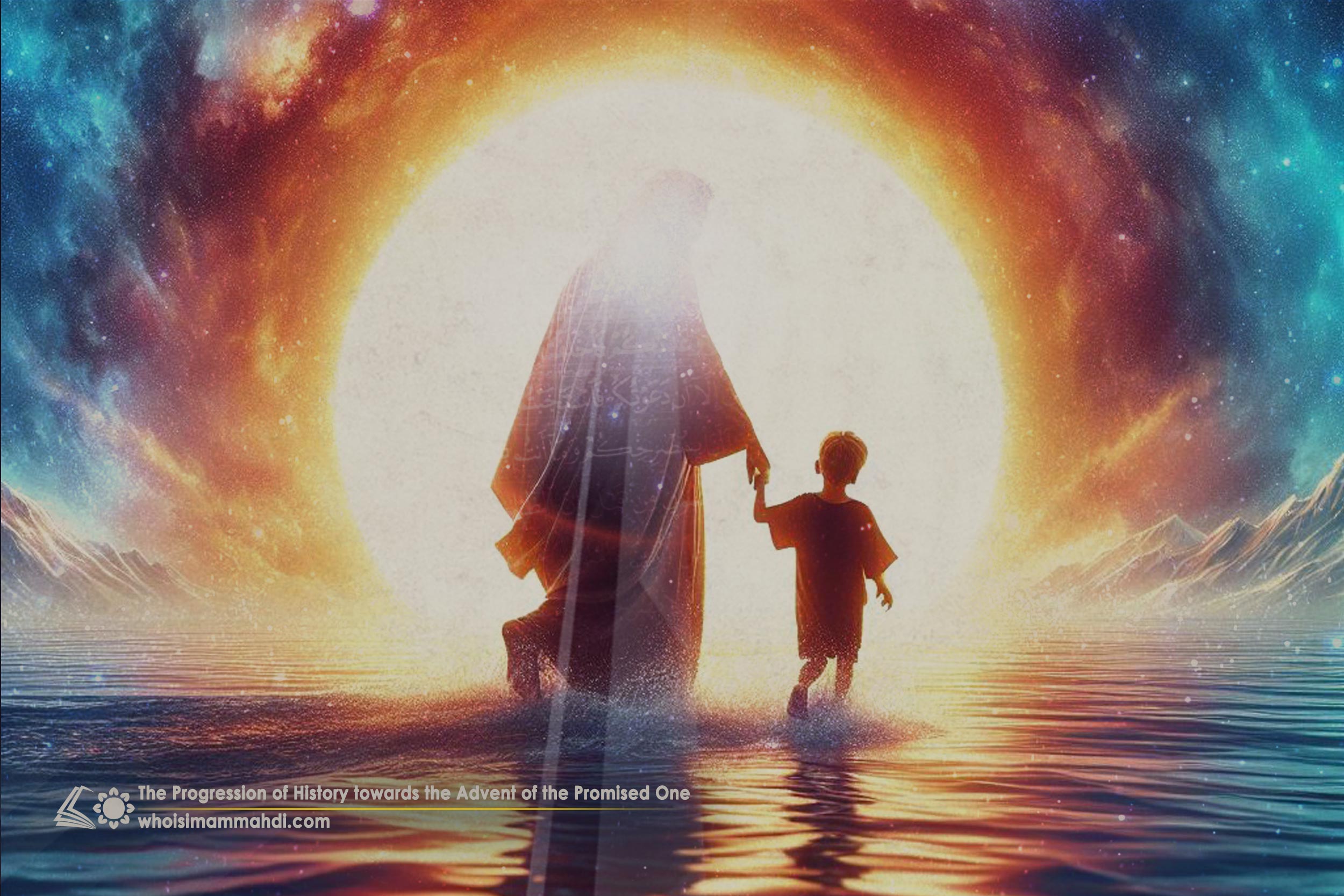
A New Look at the Battle of the Trench (Ahzab): Comparing Its Causes and Lessons with Those at the Start of the Ramadan War
Many of us view history merely as an exciting narrative or, at best, a cautionary tale, unaware that the fabric of history is a sobering wake-up call for our negligence. The truth is that the words of the Commander of the Faithful, Imam Ali (Peace be upon him), regarding the repetition of history, provide us with a strategic roadmap: Every recurring event is a decryption code. Understanding these codes is our way of achieving the best decisions during individual and social crises. Deeply studying history is a great and legitimate cheat sheet for life’s tests, an effort to prevent falling into dangerous precipices. Although the wheels of history always turn and trials are repeated, this repetition does not hinder the rapid forward movement of time and the world; rather, persistence in drawing lessons from history acts as a brake on our fall toward the destruction that befell those before us, placing us instead on the path of the blessed.
The Battle of the Trench (Ahzab) in early Islam is one of the most significant turning points in the history of divine religions, events and experiences that consistently recur for nations that are the true followers of the school of Islam. It was a battle where the Army of Monotheism, with its small numbers, was tasked with fighting and persevering against a massive, multi-faceted army comprised of various nations and sects of polytheism and hypocrisy. This was an army equipped with all manner of trickery and conspiracy, determined and stubborn in its false beliefs, exactly like the “Modern Ahzab” that was established at the start of the Ramadan War.
In the fifth year of the Hijra, Muslims faced a new crisis: A multi-pronged attack in which all Arab tribes united to finish off Islam once and for all. The spark for this war was ignited by treacherous Jews who had despaired of eliminating the Prophet (Peace be upon him and his family) on their own. The goal was for internal hypocrites and external invaders to sever the vital jugular of Islam in a simultaneous operation. However, by the grace of God and the foresight and faith of the Muslims, the enemy, in a war where their victory seemed certain, was defeated and forced to retreat.
In the cycle of history, the Islamic Revolution of Iran has always faced the attacks of the “Confederates” (Ahzab) of polytheism and hypocrisy, but it experienced a more specific form of this at the start of the Ramadan War. This was a difficult and instructive experience that occurred as a result of the Islamic Revolution’s continued resistance and victory against the imposed wars of the United States and Israel. The Jewish entities, who are perennial losers in history, sought refuge with the arrogant U.S. government to defeat the Army of Monotheism of the Islamic Revolution through an alliance of arrogant nations and factions. The goal was to end the life of Iran’s Islamic Revolution through external military attacks combined with urban warfare, internal division, and chaos. They were unaware that the Army of Monotheism gets its strength directly from God’s supreme power. Because this army is tied to eternal Truth, it can never be destroyed.
In this article, we will address what occurred in the Battle of the Trench in early Islam and its alignment with the start of the Ramadan War. We then take a closer and more analytical look at the reasons for this battle, its lessons, the secrets of victory, and the warning signs of collapse and defeat.
The Role of the Jews in Sparking the Battle of the Trench
The breach of covenants and betrayal by the Jews toward Muslims did not only occur during the 12-day war between Iran and Israel or during periods of sedition like the start of the Ramadan War. An example of this can be examined in the Battle of the Trench. The Prophet (Peace be upon him and his family), having become aware of the betrayal and malicious intentions of the Jews after the Battle of Uhud in the fourth year of the Hijra, went to the settlement of the Bani Nadir under the pretext of consulting them. The Jews welcomed him with open arms but intended to assassinate him. This betrayal and breach of covenant occurred despite the fact that, at the time of the Prophet’s migration to Medina, they had signed a contract stating that if they posed the slightest danger or betrayal to him, their property, lives, and families would be at his disposal [1].
Ultimately, the decision of the Prophet and the leaders of Islam was that the Jews must take all their property, except for weapons, and leave Medina. While they logically must have gone toward Khaybar or Sham, they headed toward Mecca to meet the leaders of the Quraysh. The Bani Nadir incited the Quraysh to unite against the Muslims and paralyze Islam in Medina. With their customary deceit, the Jews made the Quraysh eager for a serious confrontation with the Muslims, claiming that the Muslims had grown weak in Medina and that it was an opportune time to uproot them. Furthermore, the Jews, knowing the Quraysh’s weaknesses, were aware of the grudge from the defeat at the first Badr and the humiliation at the second Badr. They recognized the Quraysh’s dream of global supremacy and sought to reassure their leaders of victory. To this end, they reported the cooperation of hundreds of swordsmen from the Bani Qurayza Jews at the entrance of Medina, reviving the Quraysh’s passion for victory and revenge [2]. Following this incitement, the Quraysh decided to unite with the Jews of Bani Nadir, Bani Qaynuqa, Bani Qurayza, and other Arab tribes. This alliance formed an incredibly powerful force, and countering such a wealthy and formidable union seemed impossible, an event similar to what occurred at the start of the Ramadan War.
Events of the Battle of the Trench Around the City of Medina
The Muslims became aware of the communications and alliances between the Jews and the Quraysh, and they had to find a solution for this serious threat. This time, the enemy was not limited to the polytheists of Quraysh or a single Jewish tribe. Rather, all polytheists had united with all the Jewish tribes and other Arab clans, determined to end the life of Islam.
The Prophet (Peace be upon him and his family), following his constant habit, formed a war council to examine various measures for confronting the enemy. Some suggested urban warfare, but given the massive population of the enemy, this proposal was rejected. Salman the Persian, drawing on his experience with Persian warfare, suggested digging deep trenches around Medina [3] to deprive the enemy of their power and speed. Approximately 3,000 Muslims prepared to face an enemy army of about 10,000 by digging a 5.5-kilometer trench, 5 meters wide and 5 meters deep [4]. The enemy’s army advanced toward Medina at high speed, but the defensive trench became the primary obstacle to their movement. The forces of disbelief and hypocrisy remained behind the trench for a month, repeatedly attempting to cross through hand-to-hand combat and direct assaults, but they faced immense difficulties. Since this battle took place during the winter and a period of famine in Medina, conditions became even harder for the enemy. Strong winds and bitter cold made things extremely tough for them [5]. Rain turned the trench into a muddy and slippery pit, claiming many casualties from the enemy. Furthermore, their supplies were running low, and the brave soldiers and commanders of Islam did not allow a single enemy to cross the trench. Under these conditions, the enemy, despite all its power and wealth, effectively failed against the faith, strategy, and steadfastness of the Muslim army. Their patience ran out, and whispers of retreat and returning to Mecca began to spread. This is much like when the 12-day war in the summer of 2025 met with failure, and the hollow superpowers were forced to retreat, setting the stage for the Ramadan War.
Events Inside the City of Medina During the War
Studying the events of the Battle of the Trench is as if one is reading the exact narrative of the start of the Ramadan War or the sedition of January 2026. The enemy, stuck behind the trench and unable to bear the weight of the entire Satanic front being trampled, decided to fire their final poisoned arrow at the heart of Islam. The enemy established contact with infiltrated agents inside the city and launched urban chaos operations. They intended to pave the way for the victory of the army behind the trench by igniting a war between Muslims and Jews within Medina. The Bani Qurayza tore up the treaty they had signed with the Prophet (Peace be upon him and his family) and began hostilities [6]. News of the Bani Qurayza’s betrayal reached the Prophet. In a situation where the defeat of Islam seemed certain, he shouted with courage and bravery: “O Muslims! bring you good news that victory is near.” The plan of the Bani Qurayza was to loot the city and terrorize the women and children. Furthermore, reports reached the Prophet (Peace be upon him and his family) that the Bani Qurayza intended to let the enemy into Medina through their own fortresses, causing the city to fall. Since the brave Muslim men were busy guarding the trench and the city was empty of warriors, the Prophet (Peace be upon him and his family) commissioned Zayd ibn Harithah and Maslamah ibn Aslam, along with five hundred soldiers, to patrol the city and shout Takbir (Allahu Akbar) to prevent the transgressions of the Bani Qurayza and to calm the hearts of the women and children [7]. The city fell into severe chaos, but gradually improved through the Prophet’s measures and the bravery of the believers. Some people were terrified and had taken refuge in their homes, fearing the end of Islam. This was because Banu Qurayza was supposed to attack from behind, and the various allied forces from the front, to destroy the Muslim army. This exact scenario was repeated at the start of the Ramadan War. Urban riots and disturbances in the country intensified under the guidance of hypocrites and domestic and foreign operatives. However, with the help of God, the pure blood of the Supreme Leader, and the unique steadfastness and insight of the devout revolutionaries, the ship of the Islamic Revolution was saved from the storm at the start of the Ramadan War.
The Fate of the Confederates and the Enemy’s Fifth Column
Ultimately, the Prophet (Peace be upon him and his family) designed a plan and, with the cooperation of his companions, succeeded in dispersing and defeating the Confederates. By sending spies between the Quraysh and the Bani Qurayza, he made them suspicious of one another. The Confederates outside Medina, who well knew they could achieve no success without the support of internal infiltrators and internal division among the Muslims, accepted their defeat after a month of effort and patience and were forced to retreat. This is the same result that the power and steadfastness of the Iranian Revolution brought about in the 12-day war, the January 2026 sedition, and the start of the Ramadan War. Of course, some tribes present in the Battle of the Trench agreed to separate from the Confederates in exchange for certain benefits, but the Muslims were not willing to pay ransom to the enemy [8].
After repelling the enemy threat outside the city, it was time to destroy the last nest of corruption: The Jewish neighborhood of Bani Qurayza. God commanded the Prophet (Peace be upon him and his family) to bring the traitors’ matter to an end. He handed the banner to Imam Ali (Peace be upon him) and went to confront them. The Prophet (Peace be upon him and his family) could never leave the Bani Qurayza alone after this event, as it was not unlikely that they would unite with the enemy again and betray him just as the Bani Nadir Jews had. Furthermore, they had proven that they were not loyal to their covenants and could stab from behind at any moment. They were the internal enemy of the Muslims and the key to suppressing Islam. Consequently, taking action regarding the Bani Qurayza and halting what they were doing was necessary for the Muslims. Finally, at the request of the Bani Qurayza and the Aws tribe, it was decided that the leader of the Aws, Sa’d ibn Mu’adh, would decide on this matter. Contrary to the persistence of his tribe, Sa’d ruled that the fighting men among the traitors should be executed, their property divided, and their women and children taken captive [9].
Sa’d had a close relationship with the Jews, was aware of their betrayals, and knew their sinister goals. He was likely not unaware of the Jewish penal laws in this regard as well. The text of the Torah states that if you intend to battle a city and they enter into war, as soon as you overcome the city, put all the men to the sword, then take the families and their possessions as spoils for yourself [10]. This is the same understanding that the Islamic Revolution has had, and continues to have, regarding the reality of the Jewish entities in all crises and seditions, such as the January 2026 sedition.
Similarity in the Conduct of the Jews: The Battle of the Trench (5 AH) vs. the Year 2025/2026 AD
Aside from the events of the Battle of the Trench and the start of the Ramadan War, most people think that the Jews are a people merely seeking a place to reside, harassing others only to secure a home. However, this is not the case. The Jewish vision is to dominate the entire world and establish a global Jewish government. This goal is not unique to yesterday or today; rather, sinister plans have been drawn for centuries, and many overt and covert operations have been executed to bring them to fruition. A distinct feature of this group is their habit of concealing themselves behind others, despite being the main architects of the crisis. Global historical events testify to the claim that one end of every severe and momentous world event is tied to the Jews. From Hitler’s crimes to the infiltration of Christianity and manipulation and alteration of it, the domination of churches and various governments through wealth and sorcery, the instigation of the Crusades, and hundreds of other festering wounds of history, all trace back to the Jews and originate from poisonous Zionist thought. When we refer to Islamic history, we see countless sufferings in Islamic and Shiite history up to the present day, carried out through projects of Jewish infiltration into the core of the Islamic government. This has turned Islam into a patient in its death throes, whose life has reached its limit due to the absence of the rule of an expert infallible Imam.
The historical pattern of the Jews throughout history has been to first make immense efforts to execute their plans. However, possessing only wealth and sorcery as their capital, they have always failed and resorted to superpowers to carve out an advantage for themselves. Before the Battle of the Trench, the Jews had repeatedly attempted to eliminate the Prophet (Peace be upon him and his family) and destroy Islam [11], but once they were certain of their inability, they turned to the superpowers of the age. Today’s confrontation between the Jews and the Islamic Revolution of Iran is based on that same past blueprint and method. When the Jews’ hollow, deceptive, and borrowed prestige and power were utterly destroyed in the 12-day war with Islamic Iran, they knew well that they must now retreat and deploy their powerful proxies, such as the U.S. and its allies. This was the strategy that led to the January sedition and the Ramadan War.
When the Satanic front, the proponents of Zionist ideology, realized they could not overcome the military power and faith of the End Times army of Islamic Iran, they decided to launch urban warfare. They launched the December sedition intending to internally erode and dismantle the Islamic Revolution of Iran. However, the Revolution and the patient people of Iran overcame this sedition, like the hundreds of others created against Iran during the more than forty years of the Islamic Revolution, with pride.
The Reasons behind the Difficult Trials and Severe Pressures in Battles
The battle between the monotheistic, anti-Taghut (tyranny) thought of the Islamic Revolution and the thought of global Zionism is not a matter of yesterday and today, or even just the early days of Islam. Rather, this battle between good and evil began at the dawn of human creation between the army of monotheism and the army of Satan, and it continues until the establishment of the government of Divine civilization over the world by the Promised Savior. Every human being, whether they like it or not, and whether they know it or not, is a member of one of these two armies, and their choices, relationships, intentions, and lifestyle determine this membership.
The Definite Divine Law of Sifting
Being on the side of truth is not easy, and the closer we get to the advent of the Savior, the harder it becomes to remain steadfast and enduring in this front. It is the unchangeable tradition of God that God’s party must be cleansed of impurities, and the chaff must be sifted out from this front. The law of sifting and purifying the sincere and the truthful from the hypocrites and polytheists operates at a powerful, high-speed pace. The purification of individuals in this law takes place through calamities and trials. As we draw nearer to the peak and victory approaches, the tremors grow more intense, the tests become harder, the atmosphere grows dustier, the illusion of defeat becomes more convincing, doubts multiply, and the calamities grow deadlier. All these events are God’s definitive and certain plans to manifest the truth of individuals’ hearts.
God’s law is to lead the army of truth to the very brink of definite defeat in certain arenas, so that the people of certainty remain and those with doubt depart. Just like when the Jews from behind and the Confederates from the front intended to slaughter Islam and victory seemed remote. Or like the moment when Pharaoh’s army pursued the Israelites from behind and the terrifying ocean was in front, waiting to swallow them. At that time, God, according to the law of sifting, was turning the sieve to see who had certainty, who doubted, who was a hypocrite, and who was a polytheist. The unchangeable law of sifting is the Law of final fallouts and growths based on individuals’ lifestyles and heartfelt beliefs, fallouts and growths that occur in the heat of minor and major seditions.
The Test of Individual Monotheism (Tawhid)
When circumstances become dire for a person from all sides and all hope is lost, the existential truths and diseases of the heart spill out and reveal themselves. This is where the caliber of an individual’s polytheism or monotheism is revealed. Under such pressure, the monotheistic person finds peace, believing wholeheartedly that God’s victory is on the way and the time for salvation has arrived. This is because they have lost all hope in themselves and all earthly connections and facilities, just like during the Battle of the Trench, when the believers saw the vast enemy armies and, with faith, declared that God and His Prophet (Peace be upon him and his family) had truly said the enemies would come, and this only increased their faith [12]. These conditions are the double-edged sword from which the pure emerge victorious, while the impure are cast out and fall from the path. The issue of defeat and victory is a completely monotheistic and inner state matter, not a military or strategic one. Every individual, based on how much they have guarded their heart throughout life and their efforts to purify their soul and overcome its spiritual illnesses, will succeed or fail in the difficult tests of the sifting process. Untreated vices and spiritual diseases become the very weeds that emerge one by one in that moment of desperation, entangling the mujahid’s feet and grounding them. Unconquered fears, the various beloveds not uprooted from the heart, and uncontrolled earthly concerns become the very lost monotheism that makes a person’s heart tremble upon seeing the enemy army’s power and wealth or the desire for comfort and ease, cutting them off from the protection of the God’s wali and leads them into the embrace of Satan’s army. This is the same calamity that befell many at the start of the Ramadan War and, near the peak, deprived them of the pleasure of conquest.
Secrets of Victory and the Character Key-Codes of the Warriors of the Front of Truth
The Battle of the Trench, the January 2026 sedition, and the Ramadan War have not been and are not the first or last seditions of the world. All those eager for the accompanying the infallible Imam, those who aspire to be the agents of the Imam in preparing for the advent and the Noble Rule of the Righteous, and those who seek eternal bliss, have no choice but to know the secrets of success in the End-Times trials and to recognize the key characteristics of the future-making righteous ones of the world. In the following, we will examine the character key-codes of these individuals and the path to reaching this station, focusing on the start of the Ramadan War.
The Relationship Between Steadfastness and Piety
As stated previously, in the battle between the armies of polytheism and monotheism, numbers do not matter. Instead, the strength of their faith and the power of their souls are the criteria for victory or defeat. This secret is revealed in the Quran, where God states in Surah Al-Anfal [13]: “Twenty of you will overcome two hundred, and a hundred of you will overcome a thousand of them.” However, God has set a specific condition for this divine assistance, stating: “If there are among you twenty who are patient and steadfast.” This means the condition for this support and God’s miraculous intervention is the steadfastness of the believers in bearing the pressures and hardships of struggle. God shows the blueprint for reaching this treasure in Surah Al-Imran, completing the puzzle of the previous verse by saying: “If you remain patient and conscious of God (pious), God will assist you with several thousand marked angels” [14].
Therefore, the missing link that leads to steadfastness is piety. How is it possible for someone who is not a person of piety, and who has not spent a lifetime enduring the pains of practicing self-restraint, to stand firm and not bend under the weight of pressures and calamities? God has promised to test our steadfastness and, if we emerge successful from this trial, He will send hosts of angels to our aid. However, the point is that attaining this level of steadfastness requires prerequisites. This station demands a lifetime of practice and of failures and victories in the daily arena of piety. With years of respecting God’s limits and following His commands, steadfastness settles deep within a person and makes them strong.
In every verse related to the battles of early Islam, God identifies piety as the code for success and names egoism and lack of piety as the factors behind downfall. If the army of Islam emerged victorious in the Battle of the Trench, despite all evidence pointing toward an enemy victory, we must find the cause in the long-term steadfastness of the combatant pious.
Not only in the “Ramadan War” but in the heat of the Islamic Revolution of Iran and throughout the battles and seditions of the past forty years, the Leaders of the Revolution have, more than anything else, strongly urged the people to observe piety. This is because they are well aware that a nation lacking piety will also lack steadfastness.
The Role of the “Person of Abundance” (Kathir) in the Victory and Defeat of Taghut
The question arises: How can one pious individual be equivalent to a thousand? To answer this, we examine the conceptual progression of a Quranic verse. In this verse [15], God describes some companions of the prophets with the phrase “Ribbiyyun Kathir” (Many Godly Men). Since we know most prophets were lonely and estranged on their path of mission, what is meant by Kathir here? In this context, Kathir does not refer to numerical quantity, but rather to the expansive reality and the high, influential power of these individuals’ souls. This reality and power are produced in a sound heart through the treatment of its internal diseases and the acquisition of virtues in place of the infections and plagues of the self. This is because a heart that has freed itself from the captivity of material attachments and united with its true Beloved—God—attains a strength derived from His infinite power. Such a person is considered a person of abundance for the front of truth and is sufficient to face an entire army of the enemy, for the nature of their power is not earthly and lies beyond material calculations. In the Battle of the Trench, Imam Ali (Peace be upon him) entered a duel with the formidable enemy commander named Amr ibn Abd al-Wud. Amr was no small figure; the fate of the Trench war depended on the outcome of this hand-to-hand combat. This is because the morale of both armies was tied to these two champions. A fierce battle ensued, and the Imam sustained a severe wound, but ultimately, Amr was killed. This single-handed victory shifted the fate of a war involving thousands, just as the Imam’s lonely but heroic stand at the Battle of Uhud amazed the angels of Heaven. Regarding the Imam’s defeat of Amr, the Prophet (Peace be upon him and his family) stated: “The value of this strike and your sacrifice is greater than all the deeds of my Ummah, for in the shadow of the defeat of the highest champion of disbelief, the Islamic Ummah became honored and the nation of polytheism became humiliated.”
The history of Islam and Shiism has always suffered from a shortage of these People of Abundance, and for centuries, humanity has remained separated from the guidance of the Infallible Imams (Peace be upon them). Yet, in the era of every Imam, a few individuals from this group existed, godly men like Malik al-Ashtar, Miqdad, Abu Dharr, Salman, the martyrs of Karbala, and the true companions of the Imams throughout the 250 years of their Imamate, as well as the upright scholars and true mystics during the occultation of Imam Mahdi (Peace be upon him).
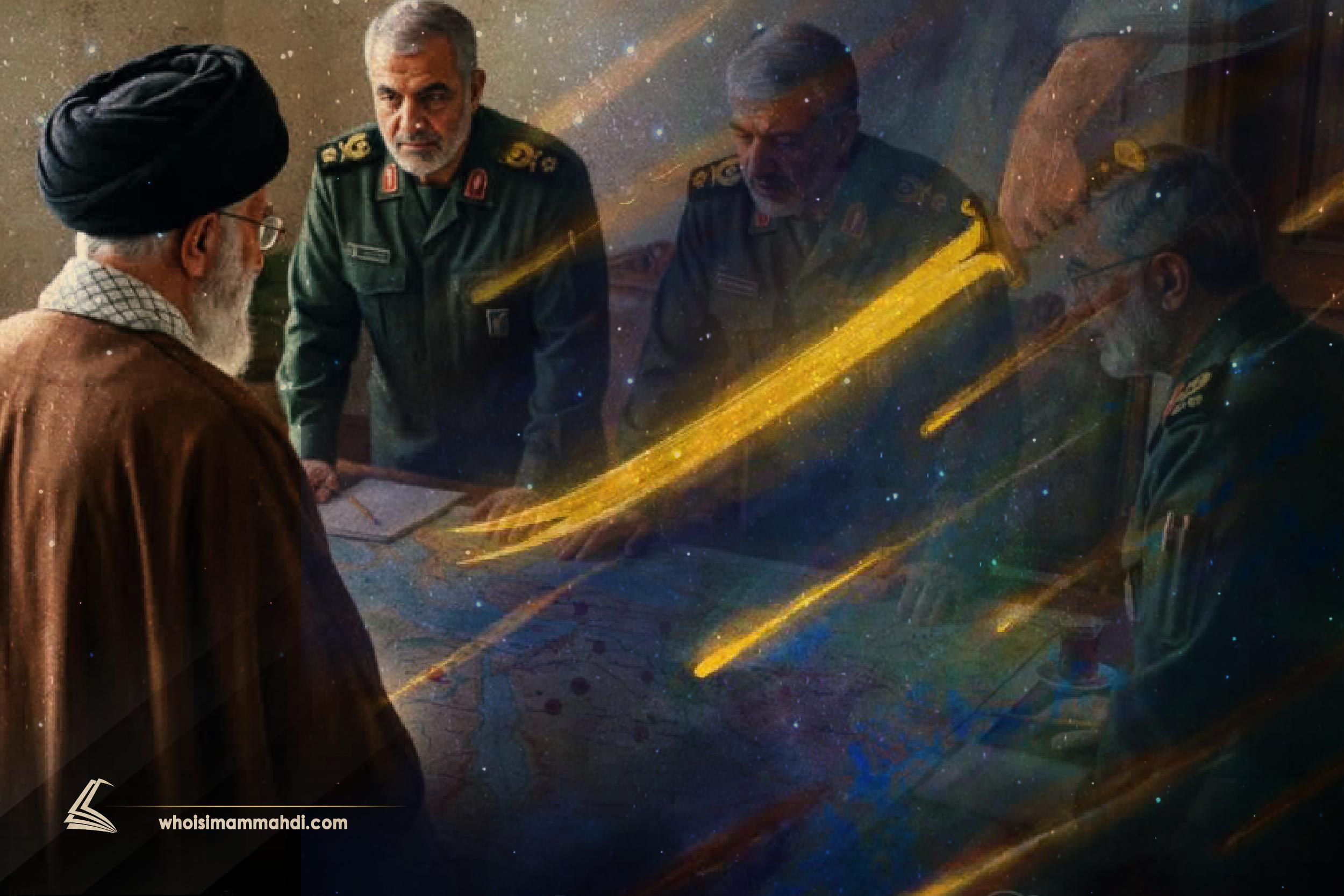
The Islamic Revolution of Iran, which is the prelude to the establishment of the global government of Imam Mahdi (May God hasten his advent), was fueled by the spiritual strength of such People of Abundance. It rose to fight the final Taghut and nurtured the righteous ones of the End Times. Imam Khomeini was a “Man of Abundance” who could not tolerate the silence of those claiming to be clergy; he rose up alone, and the depth of his soul inspired a massive wave of revolutionaries. After him, the banner was in the hands of a “Man of Abundance” named Sayyid Ali Khamenei. Through his expansive soul and the pious followers who trailed him, passing through various seditions, such as those at the start of the Ramadan War, became possible. And now Sayyid Mojtaba Khamenei, the new Supreme Leader of Iran, holds the banner. Just as during the Battle of the Trench, a verse was revealed to the believers to take the Messenger (Peace be upon him and his family) as their role model [16]—meaning that they should not take their eyes off the friend of God, nor scatter away from around him, so that they may attain help and victory.
This time, a vast army of “People of Abundance” is being trained and prepared under his guardianship—an army made up of the elders, youth, adolescents, and children of the End Times. Their mission is to break the strength of falsehood, pave the way for the Promised Savior, and live under the Noble Government, ultimately placing the banner of governance into the blessed hands of the Savior.
References
[1]. Baqir Sharif al-Qurashi, The Life of Ali ibn Abi Talib. Qom: Ansariyan Publications, 2010, p. 78.
[2]. Ja’far Sobhani Tabrizi, The Message. Karachi: Islamic Seminary Publications, p. 340-343.
[3]. Ibid., p. 406.
[4]. Ibid, p. 407.
[5]. Muhammad ibn Jarir Al-Tabari, The history of al-Tabari. State University of New York Press, 1997, vol.5, p. 50.
[6]. Muhammad Baqir Majlisi, Bihar al-Anwar, vol. 20, p. 169.
[7]. Ali ibn Ibrahim Al-Halabi, Al-Sirah al-Halabiyyah. Beirut: Dar al-Kutub al-Ilmiyah. vol. 2, p. 315.
[8]. Abdul Malik ibn Hisham, Al-Sirah al-Nabawiyyah. Beirut: Dar al-Ma’rifah. vol. 2, p. 223.
[9]. Ibid, p. 24.
[10]. Torah, Deuteronomy 20.
[11]. Sobhani, The Message, p. 142.
[12]. Quran, 33:22
[13]. Quran 8:65–66
[14]. Quran 3:125
[15]. Quran 3:146
[16]. Quran 33:21