Censorship of Arbaeen: A Story of Omission, Distortion, and the Silence Surrounding the World’s Largest Contemporary Gathering
Each year, the Arbaeen Walk gathers millions of people from around the world in a remarkable and awe-inspiring event. Regardless of nationality, language, religion, or belief, they walk together toward Karbala to express their devotion to the ideals of Imam Hussain (Peace be upon him). Yet, despite the significance and global message of this event, the censorship of Arbaeen in international media has caused it to remain largely unknown or underrepresented on the world stage.
In truth, many people have never even heard of this gathering—or have only seen a limited and distorted part of it. This is a direct result of long-standing policies and strategies behind the censorship of Arbaeen, which for years have prevented the true story of this phenomenon from reaching global audiences. Have you ever wondered why the voice of the world’s largest human gathering is so muted in the noise of global media? This is a critical question that this article aims to explore.
Arbaeen is not only a powerful expression of unity among the faithful and a symbol of freedom within the Islamic world, but also, from a cultural and social standpoint, it offers humanity a unique model of solidarity, sacrifice, hospitality, and voluntary participation. Without exaggeration, the Arbaeen Walk is the largest human gathering of the modern era—a meeting point of diverse identities, cultures, and elevated values.
So why is it that real images, reports, and stories from the Arbaeen pilgrimage struggle to reach the global public? Why do so few people outside the region understand the magnitude or even the meaning behind it? Is the censorship of Arbaeen merely a result of political decisions by governments, or does it stem from deeper concerns—such as civilizational or identity-based rivalries? Who benefits from hiding the truth of Arbaeen? Could it be that the silence is not a coincidence or an oversight, but rather part of a calculated effort—intended to prevent global unity, suppress collective awakening, and obstruct the formation of a new shared identity grounded in justice, resistance, and moral courage?
The bitter truth is that the censorship of Arbaeen has become one of the open secrets of our time—a secret that grows more visible and more perplexing with every passing year, as the number of participants continues to rise and the global nature of the event becomes harder to ignore. It is a phenomenon that sees the voluntary participation of millions from dozens of countries—an event so massive that, in theory, it should be impossible to overlook. Yet, somehow, it remains absent from the dominant narratives of global media. The censorship of Arbaeen is not an isolated case. It is a continuation of a broader pattern we have seen before: the silencing of identity-based and justice-oriented movements. Whether it is reducing a profound global event to a local affair, erasing its images and stories from major international networks, distorting its message, minimizing its scope through a Western lens, or even assigning negative labels to flip the truth on its head—these are all tools used in the same playbook. But the questions do not stop there. If Arbaeen is so thoroughly censored, how has its true story survived? What role have “people-powered media” and the self-expression of the pilgrims themselves played in partially breaking this censorship? Could the flood of hashtags, mobile videos, and first-hand narratives succeed in breaking down the wall of the censorship of Arbaeen and introduce the world to its true essence? Finally, what are the broader implications of censoring the Arbaeen Walk? How does it affect Islamic identity, Shia presence on the global stage, and even the possibility of unity among nations in today’s world?
This article aims to explore the censorship of Arbaeen from multiple angles—from the motivations and methods behind the censorship, to its impact on public perception, cultural identity, and the global search for truth. In doing so, we hope to take a small step toward deeper understanding—and toward unveiling a reality that remains hidden from far too many eyes.
Dimensions and Methods of the Censorship of Arbaeen in International Media
The censorship of Arbaeen in international media goes far beyond simply omitting news or ignoring this vast religious event. It involves a complex set of deliberate media strategies. This structured censorship is not the result of negligence or oversight, but a purposeful effort aimed at controlling the wave of solidarity, preventing the emergence of a new global identity, and blocking the world’s awareness of an extraordinary human phenomenon. The goal is to keep public opinion far from the truth about the scale of the Arbaeen pilgrimage and its civilizational significance. To better understand the dimensions of this targeted censorship, we will now examine the various types and methods employed to censor the Arbaeen Walk in international media.
-Ignoring
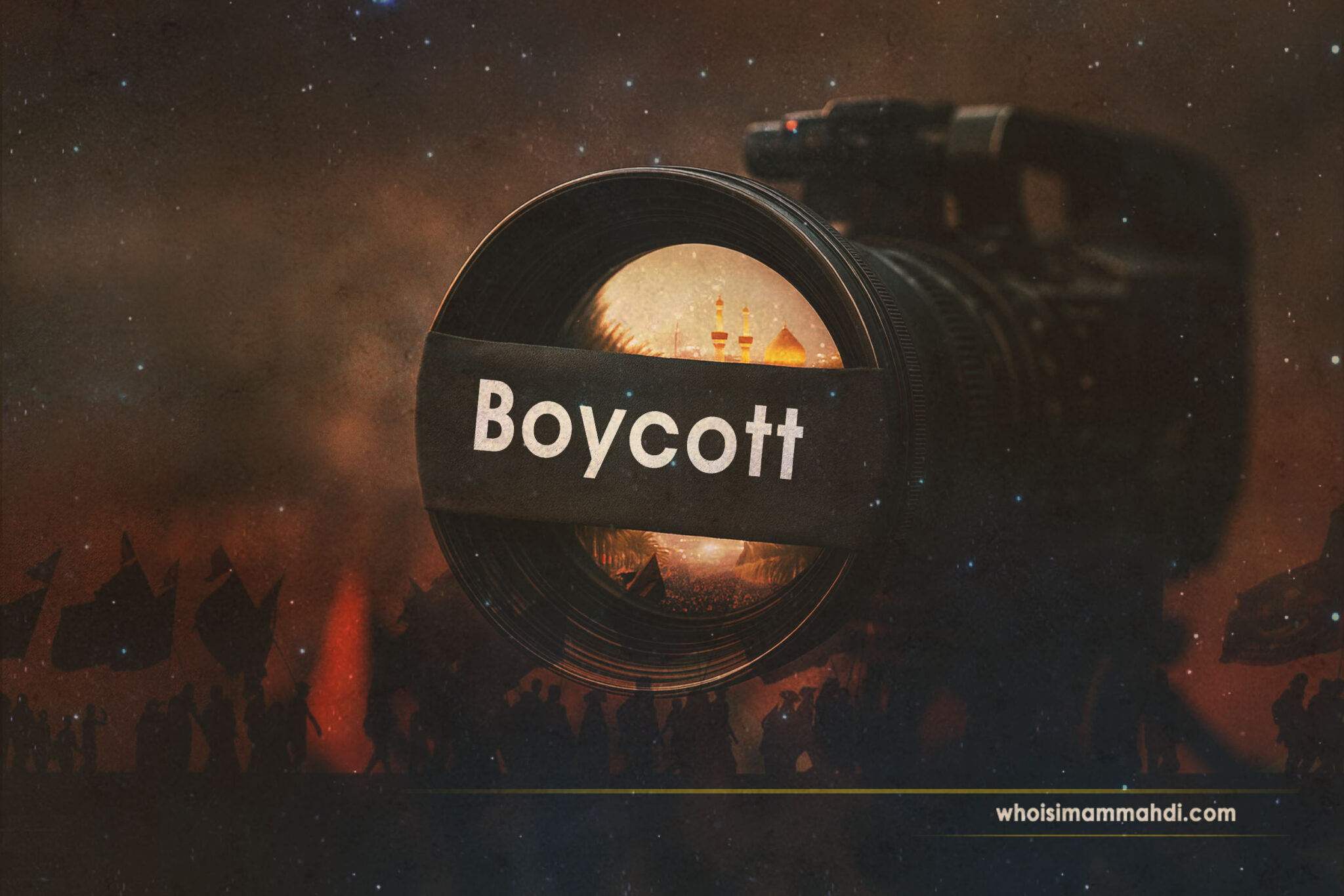
The first and most common method for the censorship of Arbaeen is simply ignoring this massive gathering. Despite being the largest religious assembly in the world, many leading Western media outlets—and even some regional ones—make no mention of Arbaeen or the millions of pilgrims taking part. This news blackout is so widespread and entrenched that every year, as Arbaeen approaches, social media activists and interested users protest the absence of coverage and images of this historic event in international media.
-Distortion
The second method is distortion. Even when some news about Arbaeen is published, it usually comes with a specific bias and a narrowed narrative. For example, most of the limited reports portray the Arbaeen Walk as a local event or reduce it to merely a security or health issue, completely ignoring its spiritual, social, and civilizational dimensions. Media outlets like BBC, CNN, and France 24 [1] sometimes choose headlines and images that downplay the massive crowd or highlight peripheral topics such as traffic jams or health problems—pushing the core message and grandeur of the Arbaeen Walk to the sidelines.
-Minimization
Another form of censorship is minimization: The largest public gathering of the century is placed alongside less significant events and continues to receive an unfairly small and insufficient reflection in international media. For instance, reviewing archives of news agencies such as Reuters [2] and The Associated Press [3] shows that over the past years, their headlines and brief reports have reflected only a tiny fraction of the reality—without touching on the spirit of solidarity or the grand civilizational message of Arbaeen.
-Removal of Images and Statistics
Another obvious method for the censorship of Arbaeen is the removal of images and statistics related to it. A simple search through the photo and video archives of international media reveals a striking absence of broad, realistic coverage of the Arbaeen Walk. This is especially notable given that much smaller events—by population size—receive repeated coverage with vivid photos and prominent headlines, often because of their visual appeal or political relevance to Western editors. Yet, even the archival visual record of the Arbaeen Walk is clearly missing.
To prove this reality, one can point to examples like the BBC [4] and CNN, which in recent years have either failed to report on the Arbaeen pilgrimage or limited their brief reports to mentioning only a small number of pilgrims or potential issues. In some years, certain non-Arab regional media outlets, such as Germany’s Deutsche Welle, have also focused on peripheral topics like crowd congestion and security problems rather than portraying scenes of unity and spirituality—effectively censoring the unique and hopeful role of Arbaeen.
Thus, the censorship of Arbaeen is more than just news omission; it is a collection of deliberate strategies including ignoring, distorting, minimizing, removing images and statistics, and mentally shaping public opinion. These tactics clearly show that the censorship of Arbaeen goes far beyond simple media blackout—it has civilizational and identity dimensions. These methods consciously keep global audiences away from the truth and grandeur of this unparalleled event, ensuring that the Arbaeen Walk remains marginalized in Western media narratives—and even in many non-Arab media outlets.
What Are the Goals and Motivations Behind the Censorship of Arbaeen?
The censorship of Arbaeen cannot be seen merely as a technical or editorial decision. Behind this phenomenon lie complex motives and goals rooted in deep political, cultural, and even civilizational rivalries. Primarily, many governments and global media do not view the Arbaeen Walk simply as a religious ritual but as a civilizational event with the potential to influence public opinion and even challenge the existing world order. The censorship of Arbaeen is carried out to prevent a wave of awareness and unity from emerging among Muslims and other nations around Islamic and Shia values. In fact, the main aim of this censorship is to quietly control and limit the formation of a new, independent identity among Muslim communities—without this control being overtly obvious.
One of the most significant motivations behind the censorship of Arbaeen is civilizational competition. Over recent decades, the Western world has established its soft power dominance through media and cultural influence over global affairs. The rise of a phenomenon like the Arbaeen Walk is seen as a threat to the continuation of that dominance. The Arbaeen gathering, by showcasing unity, sacrifice, justice-seeking, and inspiring values, presents a global image of coexistence and the power of Islamic civilization. The censorship of Arbaeen makes sense precisely at this point because the West fears that a new discourse may emerge from this massive gathering and challenge the dominant media order.
Beyond civilizational aspects, the censorship of Arbaeen also carries serious political and security concerns. Many Western think tanks and policymakers see the Arbaeen Walk as a symbol of the emergence of a new Islamic identity—especially Shia—that could serve as a practical model for other societies. If this powerful wave of identity and faith is properly recognized and narrated, it could lead to greater unity among Muslim nations and redefine their role in global affairs. Therefore, the censorship of Arbaeen is a smart, deliberate effort to prevent the empowerment and cohesion of identity movements independent of Western-preferred frameworks.
In fact, in an era dominated by Western media, maintaining the global media order is a fundamental principle. The censorship of Arbaeen, by removing or distorting this unmatched event, seeks to impose preferred news and narrative patterns on the global audience, so that popular, ritualistic, and civilizational narratives cannot break free from stereotypical and reductive frameworks. Meanwhile, this censorship effectively blocks the visibility of the historic, social, and spiritual capacities of this vast gathering and undermines any independent media authority or discourse rooted in local and Islamic values.
Ultimately, the goals of the censorship of Arbaeen are tied to the current state of the Islamic world and the future identity of nations. Concerns about civilization, fear of a new hegemony, and control over the formation of a united Muslim community all contribute to viewing the censorship of Arbaeen not as a temporary decision but as a layered, organized project. A project that, by erasing the true narrative of Arbaeen, seeks to deprive the world of witnessing the rise of a new Islamic/Shia identity.
The Arbaeen Censorship Paradox: How Silencing Voices Led to a Rise in Popular Narrators
The censorship of Arbaeen is not merely a media phenomenon; it is a multilayered event that has influenced both global public opinion and the very process and representation of Arbaeen itself. The clash between the official narrative (marked by censorship or distortion) and the growing power of popular narratives has not only opened new horizons for society but also fostered the formation of collective identity and global hope. We will analyze the scope of these impacts across three subsections.
Limiting Global Awareness and Distorting the Truth
The censorship of Arbaeen has had deep and multifaceted effects on global public opinion and even on the Arbaeen Walk itself. By removing or distorting the true narratives, the censorship has caused the image of this immense gathering and its spiritual, social, and civilizational messages to remain hidden or be transmitted incompletely and superficially to many people worldwide. This ongoing situation has kept global understanding of Arbaeen very limited and shallow, depriving the public of the opportunity to grasp the event’s profound messages and motivations.
However, the censorship of Arbaeen has not merely silenced these narratives. On the contrary, this pressure has driven pilgrims toward grassroots storytelling and turning every individual into an independent media. Millions of people, by sharing images, videos, and experiences on social networks, have revealed parts of the truth of the Arbaeen gathering to the world and created a new culture of popular narration. In this way, the censorship of Arbaeen, in addition to limiting the official narrative, has become a catalyst for strengthening popular movements and hope to break through the walls of censorship.
Popular Response to the Censorship of Arbaeen: Independent and Grassroots Narratives
In response to the censorship of Arbaeen by official media, millions of pilgrims have engaged in an unprecedented phenomenon of grassroots narrative. Each Arbaeen pilgrim, equipped with a mobile phone and access to social networks, has become an active media outlet, sharing images, videos, and real-time memories that directly convey the authentic aspects of this vast gathering to the world. Hashtags such as #Arbaeen and #ArbaeenWalk have been repeated millions of times on social media, spreading the narratives of the ceremony and the spirituality of Arbaeen far beyond the walls of censorship to audiences worldwide.
As a result, rather than silencing the narratives, the censorship of Arbaeen has triggered the emergence of a wave of independent and new media, turning every pilgrim into an unmediated reporter. This explosion of grassroots narratives and widespread content creation has not only broken the power of censorship but has transformed the Arbaeen Walk into a new model of people-powered communication and collective truth-seeking, making it practically impossible to limit the truth of this event in the digital age.
Long-term Impacts and Global Achievements: Overcoming the Domination and Strengthening the Identity
The clash between official narratives and grassroots narratives about the censorship of Arbaeen has, rather than silencing the truth, created a foundation for profound transformation in the media and social spheres. Although the official narrative presents a one-sided and incomplete image, attempting to downplay the grandeur of Arbaeen, grassroots accounts—based on direct, real-time experiences—have revealed the truth of this event and uncovered its hidden layers to the world. Every year, with the release of thousands of people’s videos, photos, and brief stories, resistance to the censorship of Arbaeen’s walk has grown stronger.
As a result, digital platforms and social media have provided a space for the emergence of a free and diverse flow of narratives, eliminating the possibility of unilateral censorship. This trend has not only helped strengthen collective identity and spread Arbaeen’s message internationally but also inspired hope, unity, and resilience among nations. Breaking through the censorship of Arbaeen has become a turning point in media and social history, bringing the truth of this massive gathering beyond the limits of official narratives to the hearts of people worldwide.
The censorship of Arbaeen is not just a media puzzle; it symbolizes a deep civilizational and identity struggle that reveals itself more strongly each year. While the largest contemporary human gathering is deliberately or subtly removed and distorted from news coverage, the truth of the Arbaeen Walk, despite all limitations, continues to find its way to the global audience. Various strategies of blackout, distortion, minimization, and image removal have shadowed parts of the reality, but they have failed to completely silence Arbaeen’s global message and its unparalleled capacity for identity and civilization building.
In this context, the power of grassroots narratives and the pilgrims’ self-media movement has shown that the era of one-sided censorship is over. Every pilgrim has become a living media outlet, repeatedly challenging the walls of the censorship of Arbaeen by sharing direct and live narratives. The explosion of people-generated content and the unlimited spread of images and experiences have not only delivered the truth of the Arbaeen gathering to the world but have also provided a model for the power of grassroots communication and the revival of collective identity.
Ultimately, despite all the efforts and hidden agendas behind it, the censorship of Arbaeen, instead of silencing the truth, has paved the way for the emergence of a new era in global narratives. Today, people beyond the boundaries of official media are carriers and guardians of the true narrative of Arbaeen—a narrative that inspires hope, unity, and spiritual awakening among nations and opens a new path to overcome media dominance and return to a living truth in the realm of global culture and civilization.
References
[1]. “Almost 2 Million Iranian Pilgrims Head to Iraq for Arbaeen.” France 24, 28 Oct. 2018.
[2]. “Death Toll Climbs as Unrest Spreads in Iraq in Days of Protests.” Reuters, 4 Oct. 2019.
[3]. Menmy, Dana Taib. “Millions Flock to Iraq’s Karbala for Arbaeen Pilgrimage.” The New Arab, Accessed 15 May 2024.
[4]. “Arbaeen Pilgrimage: Millions Walk to Karbala in Iraq.” BBC News, BBC, 20 January, 2011.