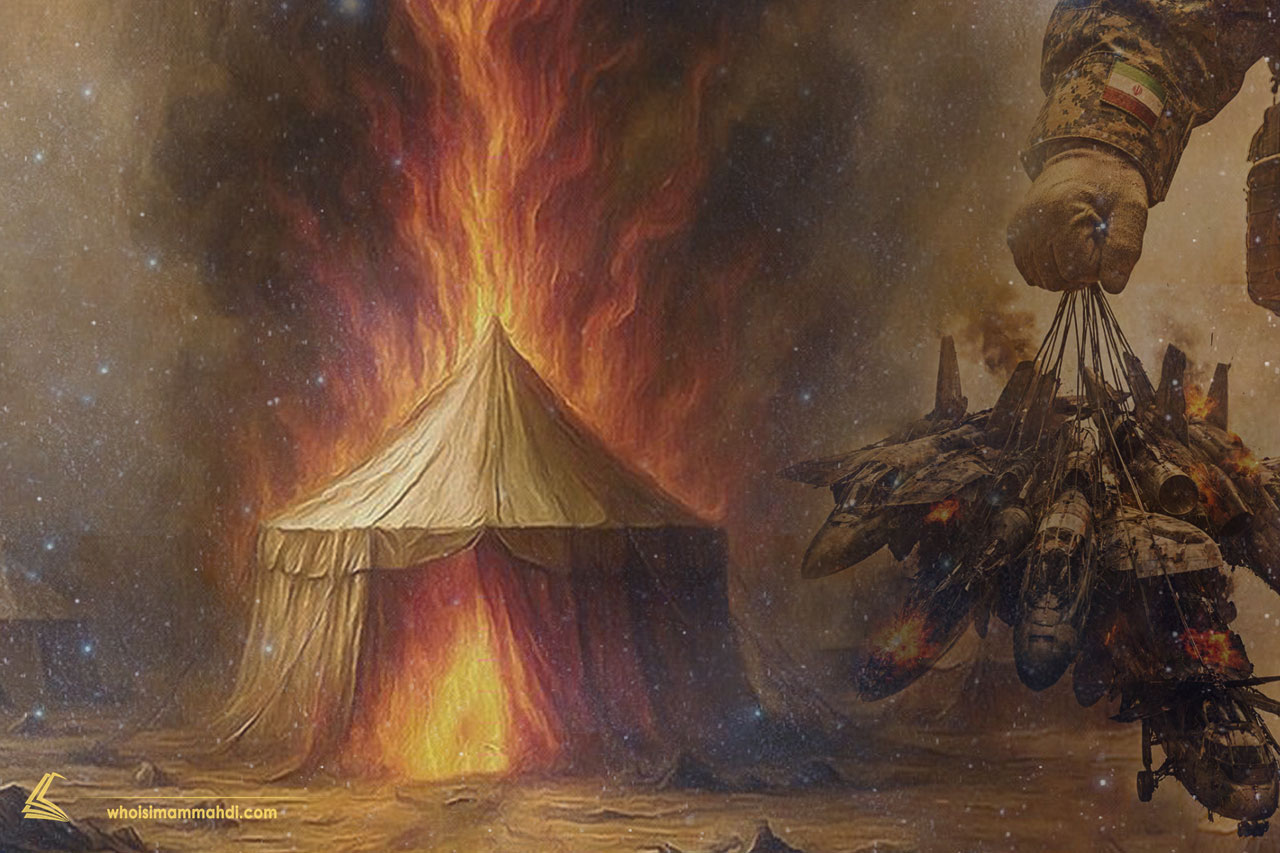
What Is the Law of Divine Assistance in the Quran, and Why Does God Sometimes Intervene Directly and Sometimes Not?
A key question in religious history is why we see divine assistance in some events but not others. The Quran suggests that this help follows a consistent, systematic tradition rather than happening by chance. To understand why some moments experience this aid and others do not, we must look at those underlying principles.
In the Quran, divine victory and God’s assistance are linked to human faith. perseverance, and action. For this reason, human will and effort alone are not sufficient to gain victory. Meanwhile divine aid does not materialize without the necessary groundwork being laid.
Accordingly, understanding the Quranic law of divine assistance explains how and why God intervenes in history. This framework helps us clarify both past events and the challenges we face today.
The Principle of Managing the World: Law Instead of Miracle
To understand how God intervenes in world events, we must first know that the world is governed by unchangeable “laws” (Quran 35:43) [1], not by “continuous miracles.” The Quran refers to these fixed laws as “divine traditions” some of which are referred later on. Just as nature has laws like gravity or cause and effect, history and society also possess unchangeable rules.
Therefore, a miracle happens only when God temporarily changes the usual order of the world for a specific purpose. In most cases, events follow natural causes and human effort. If God solved everything with miracles, then effort, patience, responsibility, and divine tests would lose their meaning. History’s major victories and defeats were shaped by these fixed laws and by people’s actions.
The Role of Humanity: The Main Actor, Not a Spectator
Contrary to the belief of many who think everything is solely in God’s hands and we play no role, the Quran views humanity as the main actor on the stage. God has designed the world in such a way that the destiny of societies is tied to the choices and actions of the people themselves. The Quran explicitly states: “Indeed. Allah does not change a people’s lot, unless they change what is in their souls” (13:11).
It also says: “If you help Allah, He will help you” (47:7). This means God’s help is not unconditional; rather, it relies on our effort. A society that is fearful, lacks motivation, or evades responsibility should not expect divine assistance. However, when people act with purpose and take responsibility, God’s support arrives.
Analyzing a Key Verse: You Start, God Delivers the Result
There is a very interesting verse in the Quran that beautifully illustrates the tradition of divine assistance: “And you did not throw when you threw, rather it was Allah who threw” (8:17).
This sentence might seem contradictory, but it outlines a crucial formula:
- Human action is essential: The Prophet (Peace be upon him and his family) threw a handful of dust at the enemy. This was a simple human deed, yet it was exactly what he could do. If he had not made that move—no matter how small—the law of divine assistance would not have been triggered.
- Ultimately, the impact is from God: Simply throwing a handful of dust, by itself, cannot defeat an entire army. This is where God intervenes, granting that small human action a powerful, decisive effect.
Similarly, there are verses in the Gospels about the very concept: “But by the grace of God I am what I am, and His grace to me was not without effect. No, I worked harder than all of them- yet not, but the grace of God that was with me” (1 Corinthians 15:10). It is also said that, “In the same way, faith by itself, if it is not accompanied by action, is dead” (James 2:17). Thomas Aquinas highlights the crucial role of human disposition and preparation in receiving divine assistance in his work called Summa Theologica as well. Thomas Aquinas believed that humans need to be prepared to do good deeds and to ultimately reach God. This preparation has two aspects: first, the readiness to act rightly, and second, the readiness to experience and enjoy divine presence. Aquinas emphasized that this preparation, especially the second aspect, cannot happen without receiving “God’s grace” (a continuous, internal gift from God). He considered this grace to be the foundation for actions that have spiritual merit and heavenly reward. In essence, for humans to achieve happiness and perform actions pleasing to God, they must first receive divine assistance to ready their will for good (I-II, Q. 109, Art. 5).
There are many ancient proverbs referring to the same belief, such as a Greek one saying, “God helps those who help themselves.” This viewpoint is cited in the stories of some ancient Greek philosophers, and one of the most famous examples appears in Aesop’s Fables, known as “The Wagoner and the God.” The story goes that a man’s wagon has gotten stuck in the mud. Before he tries to get the wagon out himself, he prays to Hercules for help. Hercules appears to him and tells him that the gods only help those who help themselves (Hercules and the Wagoner).
Even though Aesop’s story “Hercules and the Wagoner” wrongly talks about multiple gods, it still contains an original, pure truth. The story was twisted into a myth over time, but its main message comes straight from our fitrah (innate human nature). Therefore, the law is this: Humans must take the initial step and strive, and then God seals the outcome. In other words. divine blessing follows human diligence and opposes passivity.
A Look at History: When and How Does God Intervene?
By reviewing history, we realize that God has sometimes intervened directly, like the story of birth of prophet Moses (Exodus 2:1-10) [2] and many other miracles (Exodus 14:21-28) [3]. This is while usually the tasks are left to humans themselves, without God’s direct interference. To clarify this. we will examine three historical events: The Year of the Elephant, Battle of Badr, and the tragedy of Ashura, which illustrate three distinct modes of divine assistance:
- The Year of the Elephant (Aam al-Fil): Direct Intervention When There is No Way Out
In the story of Abraha’s attack on Mecca, there was no capable human force to defend the city. Had God not intervened directly by sending the Ababil birds, the Kaaba would have been destroyed, and the groundwork for the emergence of Islam would have been erased (Quran 105:1-5) [4]. Therefore, when human means and capabilities are reduced to zero and the path of truth is threatened with total annihilation. God intervenes directly—outside the normal course of events—to preserve the core of the religion.
- The Battle of Badr: When Human Effort Meets Divine Support
In the battle of Badr, the Muslims were outnumbered and lacked sufficient equipment. Yet, they fought with all their strength and determination. This is when God’s supplementary help arrived. He brought peace to the hearts of the Muslims and fear to their enemies, greatly increasing the impact of the Muslims’ actions. Battle of Badr shows us God’s usual way: People do their best with what they have, and God makes up for what’s missing (Quran 3:123) [5].
- The Tragedy of Ashura: When Society Shirked Its Duty
During the uprising of Imam Hussain (Peace be upon him), the people had sufficient resources and numbers to confront oppression, but they submitted to fear and abandoned their responsibility. Under these circumstances, God did not intervene to alter the apparent outcome of the battle, and no physical miracle occurred because God does not bear the burden of people’s irresponsibility. Of course, divine assistance during Ashura appeared in a distinct way: God preserved the truth, ensuring that its message and spiritual triumph were forever imprinted in the records of history.
Conclusion: God Works Through Human Effort
Ultimately, the law of divine assistance in the Quran reminds us that God’s help springs from the very movement and effort of human beings. When we face oppression and suffering in the world, we should not ask: “So where is God and why is He doing nothing?” Instead, we should ask: “What have we humans done and where do we stand?”
The world operates on the law of cause and effect. God accomplishes His work through us. If God were to save us with a miracle in every hardship, human free will, determination, and growth would be rendered meaningless. As long as we do not make a decision, stand up, resist and pay the price, divine aid will not be activated. The ultimate formula of the law of assistance is simply this: Humanity acts, and God brings it to fruition.
Notes
[1] . “You will find no change in the way of Allah, nor will you find it diverted to someone else”.
[2] . “When she saw that he was a fine child, she hid him for three months. But when she could hide him no longer, she got a papyrus basket for him and coated it with tar and pitch. Then she placed the child in it and put it among the reeds along the bank of the Nile. His sister stood at distance to see what would happen to him.
Then Pharaoh’s daughter went down to the Nile to bathe… she saw the basket among the reeds and sent her female slave to get it… Then his sister asked Pharaoh’s daughter, ‘Shall I go and get one of the Hebrew women to nurse the baby for you?’. ‘Yes, go’ she answered. So the girl went and got the baby’s mother.… When the child grew older, she took him to Pharaoh’s daughter and he became her son. She named him Moses, saying, ‘I drew him out of the water”.
[3] . “Then Moses stretched out his hand over the sea, and all that night the Lord drove the sea back with a strong east wind and turned it into dry land. The waters were divided, and the Israelites went through the sea on dry ground… all Pharaoh’s horses and chariots and horsemen followed them into the sea… Then the Lord said to Moses, ‘Stretch out your hand over the sea so that the waters may flow back over the Egyptians… The water flowed back and covered the chariots and horsemen… Not one of them survived.”
[4] . “Have you not seen [O Prophet] how your Lord dealt with the Army of the Elephant? Did He not frustrate their scheme? For He sent against them flocks of birds, that pelted them with stones of baked clay leaving them like chewed up straw.”
[5] . “Indeed, Allah made you victorious at Badr when you were [vastly] outnumbered. So be mindful of Allah, perhaps you will be grateful.”
Works Cited
Aquinas, Thomas. Summa Theologica. Translated by Fathers of the English Dominican Province, Benziger Brothers, 1947.
The Noble Quran. Quran.com, quran.com. Accessed 25 May 2026.
Holy Bible, New International Version. BibleHub, biblehub.com. Accessed 25 May 2026.
“Hercules and the Wagoner.” Fables of Aesop, fablesofaesop.com/hercules-and-the-wagoner.html. Accessed 26 May 2026.