An Overview of the Causes, Mechanisms, and Consequences of Jewish Influence in Contemporary Iran
The concept of contemporary history in Iranian historiography has always been a subject of debate. While some historians consider the Qajar era or the Constitutional Movement as its starting point, another group marks the Safavid era as the origin of Iran’s fundamental transformations. By establishing Twelver Shiism as the official state religion after approximately nine centuries, reviving Islamic seminaries, and compiling extensive collections of Hadith literature, the Safavids created a novel religious and political structure. The emergence of this consolidated Shiite government triggered a reaction from Jewish power centers. From the perspective of these circles, the establishment of an authoritative state rooted in Mahdavi thought posed a critical threat to their long-standing vision of global dominion. Consequently, projects designed to project influence and launch economic, political, and cultural confrontations against Iran were initiated during this period. Assassinations, cultural aggression, the indoctrination of Western ideologies, and economic and military pressures constituted core elements of this penetration strategy. A systematic examination of Jewish influence in contemporary Iran reveals that these efforts were not sporadic but rather followed a coherent strategic logic across both Safavid and Qajar periods.
The Status of Jews and the Context for Penetration in the Safavid Era
Relations between Safavid monarchs and the Jewish minority were not uniform, fluctuating according to political conditions and individual royal inclinations. Shah Tahmasp imposed stricter regulations on religious minorities due to his religious zeal. These religious pressures catalyzed widespread Jewish emigration. Under Shah Abbas, commercial and trade restrictions on Jews were removed; nevertheless, due to their historical record of collaboration with Safavid enemies, Jews were excluded from holding political posts or gaining influence within the state apparatus (Moreen 103–08). Furthermore, the dominance of European and Armenian merchants and diplomats over foreign trade pushed the Jewish population into deeper economic isolation (Ghougassian 217–31). This marginalization, however, did not eliminate Jewish influence in contemporary Iran; rather, it redirected Jewish agency toward external networks and covert channels of power. During this era, specific legal enactments—such as laws permitting newly converted Jewish individuals to claim the property of their relatives or receive royal stipends—led certain Jewish groups to convert nominally rather than out of genuine conviction, driven instead by financial and personal expediency (Savory 435–58).
The Strategic Role of Jewish Influence in Safavid Stagnation and Collapse
The strategic dimensions of Jewish influence in contemporary Iran during the Safavid period can be categorized into three main axes: economic disruptions, arming of the Uzbeks, and infiltration of the Ottoman court.
– Economic Disruptions: Although the wealth of local Jewish merchants did not rival that of European traders, their role within regional commercial networks remained significant. Friction between the state and the Jewish mercantile network disrupted Safavid trade channels, ultimately harming Iran’s regional economic influence (Fischel 203–30).
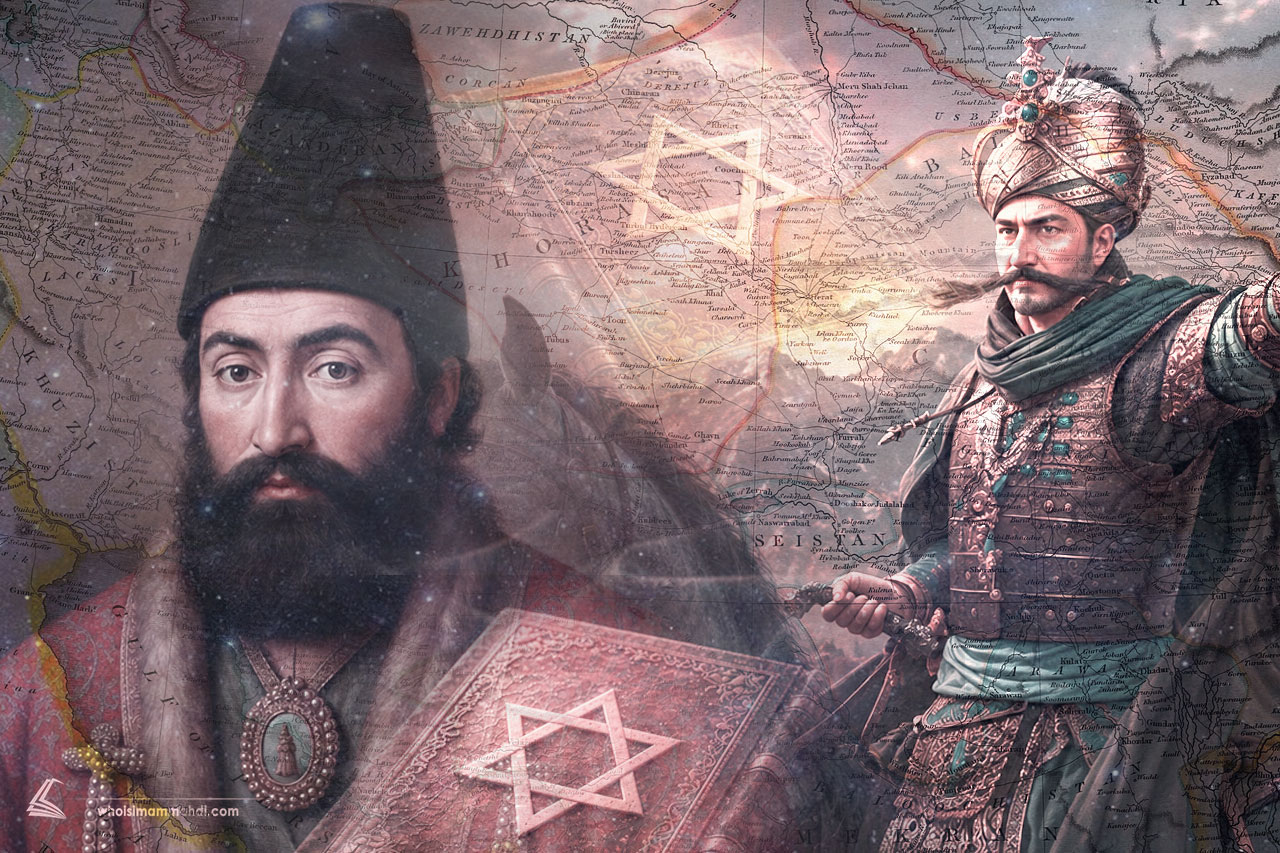
– Arming the Uzbeks on the Eastern Borders: Wealthy Jewish traders—stationed in Persian Gulf commercial hubs under Portuguese control—relocated their operations to Transoxiana, following the breakdown of relations with Shah Tahmasp and the destruction of their arms trade. In a retaliatory measure, they aligned with the Uzbeks, providing them with necessary arms for invasions into Khorasan in exchange for commercial privileges (Dickson 192–93; Figueroa 60).
– Infiltration of the Ottoman Court and Redirection of Military Campaigns: The primary effort by organized Jewish networks to undermine the sole Shiite state of the era involved securing influence within Ottoman decision-making centers. Shah Ismail‘s declaration of Shiism had heightened sensitivities within the Sunni Ottoman court. Leveraging historical channels of access to royal harems, Jewish actors gained access to Ottoman sultans. Hurrem Sultan (Roxelana), the wife of Sultan Suleiman, who possessed documented Jewish lineage or strong ties, successfully redirected the Ottoman Empire’s traditional expansion away from Europe toward sustained warfare against Shiite Iran (Williams 356). Nurbanu Sultan, the wife of Sultan Selim II (son of Hurrem Sultan) and of Venetian Jewish origin, assumed leadership of the pro-war anti-Iranian faction within the Ottoman court. This structural influence entangled the Safavid western frontier in costly, attrition-focused wars, blocking long-term Safavid stability and civilizational growth (Shaw 178).
Mechanisms and Strategies of Jewish Influence in the Qajar Era
While the Safavid phase of Jewish influence in contemporary Iran relied mainly on external military and economic pressure, during the Qajar era, methods shifted from hard security mechanisms to complex soft power strategies targeting cultural and structural frameworks.
– Removing Barriers to Western Thought and the Martyrdom of Amir Kabir: While apparently facilitating the entry of Western ideas into Iran, foreign actors sought to introduce humanistic thought to the Shiite population. The reign of Naser al-Din Shah marked the systematic entry of Western ideas into the country (Amanat, Pivot of the Universe 358–64, 383–94). Amir Kabir, the sovereign’s powerful Grand Vizier, sought to modernize sciences within an Islamic framework while actively blocking colonial expansion. Recognizing the threat, hostile networks engineered intrigues that culminated in his execution.
– Dar al-Funun and the Grounds for Future Zionist Penetration in Iran: Amir Kabir, aware of potential avenues for alien influence in contemporary Iran, founded the Dar al-Funun academy, incorporating domestic and Islamic safeguards (Ekhtiar 153–63). Following his martyrdom, foreign interests redirected the institution toward cultivating a Freemasonic elite. The removal of Amir Kabir and the Freemasonic takeover of Dar al-Funun accelerated penetration. This created a class of Western-oriented officials who came to dominate the state apparatus under both the Qajar and Pahlavi dynasties. Prominent Qajar and Pahlavi figures including Malkam Khan, Mirza Hossein Khan Sepahsalar, Mirza Ali Asghar Khan Amin al-Sultan, Moshir al-Dowleh, Mohammad Ali Foroughi, Hassan Taqizadeh, and Jafar Sharif-Emami emerged from this institutional environment (Algar 36–53).
– Subversive Sects and Ideological Distortions: The primary point of divergence between Shiite doctrine and Zionist objectives lay in Mahdism and the vision of an ultimate divine global order. To neutralize this belief system, foreign networks provided support and foundational groundwork for the emergence of heterodox sects such as Babism (founded by Sayyid Ali Muhammad Shirazi) and Bahaism (founded by Mirza Husayn-Ali Nuri) (Amanat, Resurrection and Renewal 33–40, 70, 166–74). These movements aimed to declare the end of Mahdism and neutralize Shiite resistance against global hegemony. Ali Muhammad Bab claimed finality regarding the promised savior and the establishment of global divine rule. Had the Shiite populace embraced Babism and Bahaism, the ideological barrier impeding global expansion would have ceased to exist. Amir Kabir grasped the ultimate objective of this influence in contemporary Iran and executed the Bab, an action that directly triggered his own assassination. Several Jewish and European physicians, including Jakob Eduard Polak (Polak), Joseph Désiré Tholozan (Mousavi 193), and Hakim Yehezkel (Haqq-Nazar) (Tsadik 36) held important positions at the court of Naser al-Din Shah. Their access to members of the royal household illustrates the significant role that court physicians could sometimes play within Qajar political and social networks.
– Organized Institutions (Alliance Israélite Universelle): During the reign of Naser al-Din Shah, the Alliance Israélite Universelle received royal approval to establish schools in Iran, with Prime Minister Mirza Hosayn Khan Sepahsalar supporting the initiative (Levy 458). Although the agreement was reached in 1873, the Alliance did not open its first school in Iran until 1898, during the reign of Mozaffar al-Din Shah. Headquartered in France, this organization built an extensive educational network that trained a generation of Qajar and Pahlavi diplomats and officials with Western-oriented tendencies. This phase of institutional penetration in contemporary Iran established the foundation for subsequent Zionist organizations operating within the country (Netzer 893–95). In sum, the institutionalization of Jewish influence in contemporary Iran reached its peak during this period, as foreign-backed educational and political networks systematically reshaped the country’s elite and intellectual landscape.
Conclusion and Analytical Significance
The study of foreign influence in contemporary Iran carries immense significance, as it represents an all-encompassing offensive against the first official Shiite state that established the modern Iranian-Islamic national framework. During the Safavid period, penetration operated predominantly from the outside through economic warfare, alliances with eastern Uzbek forces, and provocation of the Ottoman Empire. In the Qajar period, this strategy shifted internally, assuming cultural, educational, political, and religious dimensions—ranging from the assassination of independent elites and the ideological transformation of Dar al-Funun to the nurturing of sectarian movements and the establishment of foreign-backed institutions like the Alliance. Analyzing this historical trajectory reveals that counteracting Shiite doctrine and its messianic vision has consistently formed the core of regional strategies against Iran. This long-term pattern of Jewish influence in contemporary Iran demonstrates a consistent effort to undermine the ideological and political foundations of the Shiite state, whether through external coalitions or internal cultural subversion. Indeed, hostile strategists often display a deeper conviction regarding the transformative capacity of a Shiite Iranian state than many within the community itself. Yet, the Holy Quran and other divine scriptures promise that a righteous movement will arise in the End Times. Zionism will expend every effort to prevent this movement from coming to fruition, but the divine promise is certain and irrevocable. Through trials, hardship, self-purification, spiritual vigilance, and relentless struggle, these individuals will overcome corrupting forces to establish the Rule of the Righteous, paving the way for the ultimate restoration of divine justice, where humanity will experience true divine guidance and fulfill its purpose as God’s deputies on Earth.
Works Cited
Algar, Hamid. Mīrzā Malkum Khān: A Study in the History of Iranian Modernism. University of California Press, 1973.
Amanat, Abbas. Pivot of the Universe: Nasir al-Din Shah Qajar and the Iranian Monarchy, 1831–1896. University of California Press, 1997.
—. Resurrection and Renewal: The Making of the Babi Movement in Iran, 1844–1850. Cornell University Press, 1989.
Dickson, Martin B. Shah Ṭahmasp and the Úzbeks: The Duel for Khurásán with ʿUbayd Khán, 930–946/1524–1540. 1958. Princeton University, PhD dissertation.
Ekhtiar, Maryam. “Nasir al-Din Shah and the Dar al-Funun: The Evolution of an Institution.” Iranian Studies, vol. 34, no. 1–4, 2001, pp. 153–63. JSTOR, https://doi.org/10.1080/0210860108702000.
Figueroa, Don García de Silva y. Safar-nāmah-i Fīgūʾīrā [Travelogue of Figueroa]. Translated by Gholamreza Samii, Noow Publishing, 1984.
Fischel, Walter J. “The Region of the Persian Gulf and Its Jewish Settlements in Islamic Times.” Alexander Marx: Jubilee Volume on the Occasion of His Seventieth Birthday, edited by Saul Lieberman, Jewish Theological Seminary of America, 1950, pp. 203–30.
Geller, Randall S. “The Baha’i Minority in the State of Israel, 1948–1957.” Middle Eastern Studies, vol. 55, no. 3, 2019, pp. 403–18.
Ghougassian, Vazken S. “Julfa i. Safavid Period.” Encyclopædia Iranica, vol. 15, fasc. 2–3, 2009, pp. 217–31. Encyclopædia Iranica Foundation, www.iranicaonline.org/articles/julfa-i-safavid-period.
Levy, Habib. Comprehensive History of the Jews of Iran: The Outset of the Diaspora. Edited by Hooshang Ebrami, translated by George W. Maschke, Mazda Publishers, 1999.
Moreen, Vera Basch. “Judeo-Persian Communities iv. Medieval to Late 18th Century.” Encyclopædia Iranica, vol. 15, fasc. 1, 2009, pp. 103–08. Encyclopædia Iranica Foundation, www.iranicaonline.org/articles/judeo-persian-communities-iv-medieval-to-late-18th-century.
Mousavi, Seyed Mehdi. French Diplomatic Odyssey: Continuity and Change in French Policies towards Iran (17th–19th Centuries). 2024. University of Delaware, PhD dissertation.
Netzer, Amnon. “Alliance Israélite Universelle.” Encyclopædia Iranica, vol. 1, fasc. 8, 1985, pp. 893–95. Encyclopædia Iranica Foundation, www.iranicaonline.org/articles/alliance-israelite-universelle.
“Polak, Jakob Eduard.” Encyclopædia Iranica, online ed., 2016, https://www.iranicaonline.org/articles/polak-jakob-eduard.
Savory, Roger M. “Relations between the Safavid State and Its Non-Muslim Minorities.” Islam and Christian-Muslim Relations, vol. 14, no. 4, 2003, pp. 435–58. Taylor & Francis, https://doi.org/10.1080/0959641032000127597.
Shaw, Stanford J. History of the Ottoman Empire and Modern Turkey. Vol. 1, Cambridge University Press, 1976.
Tsadik, Daniel. Between Foreigners and Shi‘is: Nineteenth-Century Iran and Its Jewish Minority. Stanford University Press, 2007.
Williams, Henry Smith. The Historians’ History of the World. Vol. 24, The Outlook Company, 1907.