

The Seeds of Division; How Zionist Manipulation Fueled the Rise of Wahhabism
Throughout history, Jews have constantly worked to divide religions. This research demonstrates Jews’ intentions to dominate the world, particularly the Middle East, for ideological, political, and economic reasons. It discusses their multistep method for achieving this goal. It uncovers Zionists’ sophisticated scheme of professing to be Muslims in order to exert influence over Muslims in Ottoman territories, including modern-day Turkey and the Arabian Peninsula, and then connect their people to carry out their goal. This essay clearly explains how Zionists imposed their perverted Jewish views on Muslims by agitating, educating, and empowering ignorant people such as Abd al-Wahhab and contributed to the rise of Wahhabism.
Today, Muslims who are caught up in their scheme and operate as takfiri terrorists not only discredit Islam but, rather than combating their primary adversary—global Zionism—they tragically slaughter their religious and human brothers. This essay details the ongoing Jewish plan to divide religions and foster deviant groups, including contributing to the rise of Wahhabism, drawing from verifiable historical sources such as admissions from a British spy, comments from Wahhabi muftis, and insights from Biblical texts.
Remark: The term “Jew” in this article refers to those with a devilish mindset who adhere to Zionist ideology. Indeed, Jews who condemn Israel and its supporters, fight against them, and stand for Palestine are on the right side of history [1,2].
An Introduction to Zionist’s Plan
The violence and the devastating impact of the crimes committed by Wahhabis have so profoundly affected the audience that it often clouds their understanding of the issue, leading to incorrect conclusions. The Wahhabi movement today is fully committed to tarnishing the image of Islam and distracting Muslims, preventing them from focusing on the real battle against their true enemy. However, it is crucial to know the origins of this ideology and how it continues to be fueled to be able to analyze the current End Times’ events.
The 16th and 17th centuries may undeniably be considered the rebirth of Jewish planning, unification, and regaining power in order to rule the world and achieve their selfish objectives. One of the main aims of this organization, who would later call themselves Zionists, was to establish deviant religious sects. They have a lengthy history of specializing in this particular job. For this reason, their influence forces were dispatched to various parts of the world, mainly the Middle East, which includes Palestine, to discover the nations’ weak points and how to enter them.
Step One: Regional Analysis and Talent Search
In 1710, a group of ten experienced agents from Britain was dispatched to various regions. One of these spies was Hempher, who was sent to Istanbul. His mission was to identify vulnerabilities within the Ottoman Empire and the broader Muslim world, aiming to create divisions that could facilitate domination. Hempher discovered an ambitious and ill-tempered man named Muhammad ibn Abd al-Wahhab Najdi. As depicted in figure 1, Ibn Abd al-Wahhab emerged as an ideal candidate for establishing a self-proclaimed revivalist sect within Islam that could further Zionist interests. The plan involved creating a sect that would reinterpret Islam through misleading arguments, labeling the killing of fellow Muslims as not only permissible but obligatory [3].
Step Two: Connecting Ibn Saud and Ibn Abdul Wahhab
The next phase of this strategy involved forging a connection between Muhammad ibn Abd al-Wahhab and Muhammad Ibn Saud, the ruler of Diriyah [a] at the time; figure 1 shows this. In 1744, this alliance led to the establishment of the malevolent sect of Wahhabism as planned by British Zionists; they entered into a pact where Ibn Saud would provide political, financial, and military support to Wahhabis in exchange for religious legitimacy from Abd al-Wahhab. Armed with jihad (striving in the cause of God) fatwas (universally applicable religious law concerning a particular subject) issued by Abd al-Wahhab, Ibn Saud launched campaigns against various tribes and cities across the Arabian Peninsula and today’s Iraq, resulting in the death of many Muslims and the plundering of their resources. This alliance stipulated that political authority would remain with the House of Saud, while religious positions would be held by the descendants of Abd al-Wahhab [4]. However, this unity should not be viewed in isolation; it reflects a broader scheme for Zionists’ influence and plan for Muslim communities.
Reason for Saudi Arabia’s Lack of Support for Palestine
Saudi Arabia’s lack of support for Palestine and the resistance movement may be astonishing for the people of the world or discouraging for Muslims. Yet, every day on social media, Saudi leaders are referred to as “shameless Arabs” and questioned about why they are not unified with Muslims and have done nothing to defend Palestine, while assisting Israel. The reason is discussed in the following section (3.1.).
The Jewish Origin of the Al Saud Dynasty
Regarding the Jewish lineage of the Saudi family, it is not far-fetched to see that they do not defend the Resistance Front today. Therefore, the expectation of Muslims for the Saudis to participate in the destruction of their fellow believers seems absurd. In fact, Muslims should rely on themselves for the annihilation of Israel rather than on Zionists relatives. In the year 851, a wealthy Jewish merchant named Mordechai disguised himself as a relative of the Al-Masalikh tribe and entered Najd [b] with them. After some time, it was discovered that he was a Jew and changed his name to Murkhan ibn Ibrahim ibn Musa.
Following several migrations to different cities, he eventually sought refuge with the ruler of Najd, whom he later assassinated to take his place. He used his wealth to buy the loyalty of Arab sheikhs to promote his Arab lineage among people. He married various Arab women and gave them Arabic names. His son, named Maqran, later adopted the name Muqrin is, in fact, the grandfather of Saud, the founder of the Saudi dynasty as seen in figure 1 [5].
Further evidence of the Al Saud family’s purported Jewish roots is presented in The Wahhabi Movement/The Truth and Roots by Abdul Wahhab Ibrahim al-Shammari. It is reported that al-Shammari faced fatal repercussions from the Saudi regime for unveiling these revelations [6].
Ibn Abdul Wahhab’s Thoughts
Abdul Wahhab‘s doctrine condemned all forms of prayer beyond direct supplication to God as shirk (polytheism). He viewed Shia practices, such as visiting the Prophet and seeking intercession through him and the infallible Imams, as acts of disbelief, declaring the lives and properties of those who engaged in such practices lawful targets. Rejecting the principle of taqlid (conformity of one person to the teaching of another), he labeled dissenters as infidels and apostates, issuing death sentence against them [7]. This was precisely what Zionists desired: to weaken Islam and destroy Muslims. What better scheme than for Muslims to turn against one another and kill each other?
Behind His Ideas
Muhammad ibn Abdul Wahhab’s beliefs were significantly shaped by the thoughts of Ibn Taymiyyah, a 13th-century deviated scholar whose lineage traces back to Tayma in northern Medina, a region historically associated with Jewish settlement [8]. In fact, the Jews settled there waiting for the coming of Prophet Muhammad (PBUH) to murder him before it was too late. Ibn Taymiyyah improved the Salafi movement, which was primarily formed by Ahmad ibn Hanbal, based on his own thoughts [9]. During his lifetime, Ibn Taymiyyah faced condemnation from his contemporaries for his perceived innovations, and his ideas largely faded until their revival in the eighteenth century [10]. For instance, Alauddin Tabrizi Qunavi Shafi’i names Ibn Taymiyyah an ignoramus who was influenced by a Samaritan Jew through his education [11].
Now we understand where the empty beliefs and innovations of Ibn Taymiyyah originated, and why the Jewish spy, Hempher, strengthened Ibn Taymiyyah’s ideas in Abdul Wahhab after several centuries.
Of course, some sources suggest that Abd al-Wahhab’s ancestry is linked to Judaism too. As illustrated in figure 1, Dr. Mustafa Turan in The Dönmeh Jews and Rifat Salim Kabar in The Dönmeh Jews and the Origin of the Saudi Wahabis propose that Abd al-Wahhab’s grandfather, Suleiman—originally named Shulman—was a Jewish man from Bursa who pretended to convert to Islam after migrating to Hijaz.
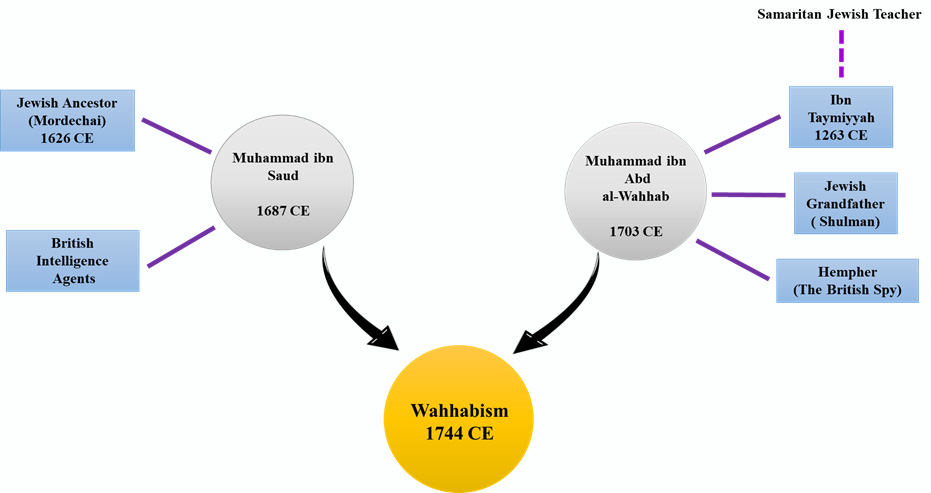
Fig. 1. Effective Factors in the Emergence of Wahhabism
Similarities between Zionism and Wahhabism
Wahhabism is a deviant group rooted in perverted Jewish beliefs. As a result, analogies between the two, both theoretical and behavioral, are natural.
Theoretical Foundations
Prominent figures of the Wahhabi sect, such as Ibn Taymiyyah and Ahmad ibn Hanbal, have attributed human-like qualities to God, describing Him with terms like laughing, descending to the earth, and sitting on the Throne. This human-like view of God is also found in the Torah, distorted by Zionists [12]. This similarity is so evident that even Al-Tuwaijri, a Wahhabi mufti, referred to the similarity between the human face and God’s face, citing a verse from the Torah: “I will soon create a human whose face resembles My own” [13].
Behavioral Foundations
Observing the crimes of Wahhabi terrorist groups reveals notable behavioral similarities between Zionism and Wahhabism. Both exhibit a racist mindset, viewing anyone outside their group as subhuman or an infidel deserving destruction. Zionists and Wahhabis both utilize threats and temptations to achieve their goals, believing that the end justifies the means. While they may present different facades, both Zionism and Wahhabism aim to distort the foundations of Judaism and Islam to further their agendas. The cultivation of terrorists worldwide, particularly in the Middle East, often involves brainwashing vulnerable individuals to portray Islam as violent. Though many Wahhabis believe they are engaging in jihad to enter Heaven, they are often manipulated by Zionists who exploit these ideologies [14].
Crimes of Wahhabis
According to the fatwas issued by Wahhabi sheikhs, the unified Saudi-Wahhabi government undertook the destruction of domes, shrines, and pilgrimage sites in the Arabian Peninsula and today’s Iraq.
Mecca and Medina
Under the pretext of defending monotheism and combating polytheism, Saudi Wahhabis destructed sacred places in Mecca, Taif, and Jeddah, massacred innocent women and children, and looted Muslim property over time. The destruction extended to Medina, where Baqi Cemetery was demolished [15]. Saudi Wahhabis destroyed the shrines of four Shia Imams including Imam Hassan (PBUH), Imam Sajjad (PBUH), Imam Baqir (PBUH), and Imam Sadiq (PBUH) as well as those of many companions of the Prophet [16].
Karbala and Najaf
Wahhabis further attacked Karbala, destroying the shrine of Imam Hussain (PBUH), the third Shia Imam, and massacred thousands of innocent people. They also attacked Najaf intending to demolish the shrine of Imam Ali (PBUH) but were thwarted by the miracles associated with this figure. Muhammad Husayn Kashif al-Ghita was among the Najaf inhabitants who defended the city. His book, Manhaj al-rashad li-man arad al-sidad, a groundbreaking work for its condemnation of Wahhabi crimes, made him the first Shia scholar to address this issue directly. The systematic destruction of graves and shrines, alongside cultural artifacts, was perceived as a strategy by Zionists to erase Islamic history and impose their own narrative through the actions of Wahhabi Saudis.
Role of Saudi Wahhabis in Weakening the Ottoman Empire
Zionists aimed to weaken the Ottoman Empire, the largest empire of its time, to occupy Palestine and create Israel. However, this plan for creating sects among religions did not emerge suddenly. Rather, its roots can be traced back to the seventeenth century, predating the formation of the World Zionist Organization [17].
Influential Jewish figures within the British Government sought to sow discord among Muslims, and the creation of deviant sects like Wahhabism was part of a broader strategy to dismantle Ottoman authority. Collaborating with Muhammad ibn Abd al-Wahhab and Ibn Saud, the Wahhabi movement generated continuous conflict and unrest for the Ottoman government, aiming to detach various regions from its control. Interestingly, after the empire’s disintegration, Zionists installed compliant rulers in Islamic territories, contributing to the current lack of unity among Islamic governments regarding the first issue of the world, Palestine [18].
Wahhabism Provided the Foundation for the Rise of Terrorist Groups
To believe that Zionists’ efforts to build sects, including the formation of the heinous Wahhabi sect, were limited to the eighth and ninth centuries is a naive view that displays a lack of knowledge of the enemies’ goals for the globe, particularly for Muslims. In reality, Wahhabism serves as the foundation for all terrorist takfiri (one Muslim declaring another Muslim, or any individual, as a non-believer, i.e., kafir.) organizations. As Prophet Muhammad (PBUH) said, “In Najd will appear earthquakes and afflictions, and from there will come out the side of the head (i.e. horns) of Satan.” [19]. Takfiri groups such as Al-Qaeda, the Taliban, ISIS, etc., have all emerged with the planning and support of Zionists, Wahhabi Saudis who supplied theological and military support, as well as the Pakistani ISI. These groups have efficiently fulfilled their duty in damaging Islam’s image, killing Muslims, and paving the way for the presence of the U.S. in the Middle East [20].
Conclusion
In this study, we aimed to provide comprehensive insights into the creation of the Wahhabi sect. We can assert that Zionists established Wahhabism as one of the most influential and controversial sects within Islam to achieve global dominance. By forming an alliance with the Saudis, they laid the groundwork for the rise of extremist Takfiri terrorists, which have often misled the movement of Islamic Awakening and diverted it from its original anti-American and anti- Zionist focus. This shift has unfortunately led to conflicts and wars among Muslims, resulting in tragic fratricide [21].
Notes
[a] A town in Saudi Arabia located on northwestern outskirts of Riyadh
[b] Central region of Saudi Arabia
References
- ir. “As the Page of History Is Turning, You Are Standing on the Right Side of It.” Khamenei.ir, 5 June 2024, english.khamenei.ir/news/10823/As-the-page-of-history-is-turning-you-are-standing-on-the-right.
- Quran, 5:66,69
- Ayyub Sabri Pasha. Hempher Memoirs: Britain, the Rise of Wahhabism and the House of Saud.
- Livingstone, David. Black Terror White Soldiers: Islam, Fascism the New Age. Sabilillah Publications, 2013.
- “Who Was ‘Mordechai’? / The Jewish Merchant’s Trick to Attract the ‘Al-Masalikh’ Tribe.” Tasnim News Agency, 27 Sept. 2016.
- Livingstone, David. Black Terror White Soldiers: Islam, Fascism the New Age. Sabilillah Publications, 2013, p. 210.
- Livingstone, David. Black Terror White Soldiers: Islam, Fascism the New Age. Sabilillah Publications, 2013, pp. 273-276.
- The Bible. Isaiah 21:13-15; Job 6:19; Jeremiah 25:32.
- “The Difference Between the Salafi and Hanbali Creed.” Reflections of a Traveler, 26 June 2013, baraka.wordpress.com/2013/06/26/the-difference-between-the-salafi-and-hanbali-creed.
- Livingstone, David. Black Terror White Soldiers: Islam, Fascism the New Age. Sabilillah Publications, 2013, p. 113.
- Al Husni, Taqi Al Din. Refutation of Resemblance to Rebellion and Rebellion, p. 66.
- The Bible. Genesis 32:24-30; Genesis 3:8; Genesis 2:2; Genesis 6:7.
- “Ideological Commonalities of Wahhabism and Judaism + Document.” Jahannews, 11 Mar. 2015.
- “Basic Commonalities and Similarities Between Wahhabism and Zionism.” Islam Times, 8 Jan. 2014.
- Livingstone, David. Black Terror White Soldiers: Islam, Fascism the New Age. Sabilillah Publications, 2013, p. 217.
- “History of Baqi Cemetery in Medina.” www.duas.org/baqee.htm.
- Hitchcock, Andrew Carrington. The Synagogue of Satan, pp. 61-62.
- Livingstone, David. Black Terror White Soldiers: Islam, Fascism the New Age. Sabilillah Publications, 2013, pp. 321-323.
- Sahih Bukhari, Hadith 1037.
- Livingstone, David. Black Terror White Soldiers: Islam, Fascism the New Age. Sabilillah Publications, 2013, p. 704.
- Khamenei.ir. “Leader’s Speech in Meeting with Participants of International Congress on Takfirism.” Khamenei.ir, 25 Nov. 2014, english.khamenei.ir/news/1985/Leader-s-Speech-in-Meeting-with-Participants-of-International.