Prophet Joseph’s Divine Model: A Blueprint for Civilization-Building and Human Perfection
Since the ultimate purpose of humanity is to reach the station of the perfect human and divine deputyship, the trajectory of human creation and growth has focused on this goal from its inception (Chittick 393).
The purpose of recounting the stories of the divine prophets is not merely to cite historical events, but to provide a foundation for designing a lifestyle based on the truth of human existence, guiding humanity toward the perfection suggested by God (Chittick and Murata 270-85). This transcendent lifestyle—characterized by peace, love, and happiness—is what humanity has long sought but has increasingly lost sight of over time.
Each divine prophet played a specific role in steering societies toward the governance of an infallible expert, guiding them along the divine path. Prophet Joseph (Yusuf in the Quran) was a son of Prophet Jacob (Yaqub in the Quran). Given the undeniable role of the Israelites in deviating from the path of divine civilization, analyzing his life is crucial for understanding the course of history.
The Foundations of Prophet Joseph’s Model of Monotheistic Civilization
The story of Prophet Joseph (Peace be upon him) in the Holy Quran stands as an outstanding model of civilization-building based on divine principles. This journey begins with his truthful childhood dream, in which the sun, moon, and stars prostrated to him. This dream prophesied his exalted status, but his brothers’ jealousy sparked a sinister plot. Their decision to cast Joseph into the well and deceive their father with a blood-stained shirt marked the beginning of Joseph’s trials and suffering.
Emerging from the well, Joseph was taken to Egypt as a slave and raised in the house of the Aziz of Egypt (Potiphar in the Bible). His piety and chastity in the face of the temptations of Zuleikha (the Aziz’s wife) served as a massive test, from which he emerged victorious through his reliance on God. Zuleikha’s conspiracy and false accusations eventually sent him to prison. However, prison became an opportunity for him to spread “Tawhid” (monotheism) and connect with inmates, paving the way for his future influence within the government.
His imprisonment ended following his precise interpretation of dreams. Interpreting the king’s dream regarding a seven-year famine transformed Joseph into a recognized sage. By providing an economic strategy for grain storage, he earned the king’s ultimate trust. Before accepting power, he insisted on proving his innocence regarding the story of Zuleikha, thereby establishing his governance on the pillars of purity and honesty.
Upon his release and subsequent acquisition of the king’s trust, Prophet Joseph assumed responsibility for the treasury. Through intelligent and ethical management, he saved Egypt from famine and achieved a high political and spiritual standing. His hardships were part of a divine plan to reach earthly empowerment and become honored and trustworthy to guide the society (Quran 12:54). His pure life proved that spiritual competence can establish a civilization based on divine values, even within a non-monotheistic structure.
Core Pillars of Prophet Joseph’s Divine Model
Every civilization, whether divine or otherwise, rests upon an ideology. Rooted in monotheism and human dignity, a divine civilization seeks a profound transformation of traditional power structures and human societies to achieve human self-improvement. The monotheistic worldview, by emphasizing God’s oneness and absolute sovereignty, provides a comprehensive framework for understanding both humanity and the universe. This paves the way for humanity’s ultimate goal, the achievement of which was the mission of all prophets: acquiring divine names and becoming similar to Him.
This objective is impossible without the self-purification of individuals, centered on monotheism and its integration into their lifestyle. Therefore, the core component of Prophet Joseph’s civilization-building discourse is the absolute oneness of God. His monotheistic perspective, trust, patience, and unwavering faith in divine promises shielded him against temptation and empowered him to overcome hardships, ultimately subjugating tyrants and false ideologies.
Evidence of the monotheistic nature of Prophet Joseph’s legacy is found in several key manifestations:
– Monotheism in the Most Severe Moral Tests: The Quran tells of the seduction of Zuleikha, a woman who invited Joseph to commit a forbidden act in her home. “She closed the doors and said, ‘Come!’ He said, ‘God forbid! Indeed, He is my Lord’” (Quran 12:23). Joseph’s immunity stemmed from his taking refuge in God. Even at the height of his power, he never absolved himself: “Yet I do not absolve my [own carnal] soul, for the [carnal] soul indeed prompts [men] to evil, except inasmuch as my Lord has mercy” (Quran 12:53). This self-mastery produced a leader who avoided egotism, both in his private chastity and his public authority.
– Monotheistic Socialization and Invitation in Prison: His monotheistic spirit transformed his imprisonment into the pinnacle of his mission. Before interpreting his cellmates’ dreams, he corrected their ideological discourse, questioning: “O my prison mates! Are different masters better, or Allah, the One, the All-paramount?” (Quran 12:39). He invalidated polytheism by stating: “You do not worship besides Him but [mere] names that you and your fathers have coined … Sovereignty belongs only to Allah” (Quran 12:40). This perspective elevated dream interpretation from a mere personal skill to a display of divine power intended to guide an idolatrous society.
– Manifestation of Unity of Divine Acts (Tawhid al-Af’alī) at the Summit of Power: The culmination of this monotheistic journey and its civilizational impact is evident in Joseph’s final prayer. Having achieved political authority, he attributed his power entirely to divine grace: “My Lord! You have granted me a share in the kingdom, and taught me the interpretation of dreams. Originator of the heavens and earth! You are my guardian in this world and the Hereafter! Let my death be in submission [to You], and unite me with the Righteous” (Quran 12:101). This confession at the zenith of power demonstrates complete surrender to God—a perspective that compelled both the ruler of Egypt and Zuleikha to testify to God’s oneness, thereby building a civilization upon divine servitude rather than human slavery.
The Israelites’ Arrival and Prosperity in Egypt
The Holy Quran clearly states that, after attaining a position of honor and authority, Prophet Joseph invited his father and family to join him in Egypt. As stated at the end of Surah Yusuf: “Welcome to Egypt, in safety, God willing” (Quran 12:99).
At this point, the family of Prophet Jacob entered Egypt. Under Joseph’s protection, they enjoyed security, respect, and relative prosperity. This group, later known as the Israelites, initially lived in Egypt as an honored and supported family.
The Israelites multiplied and flourished under Joseph’s authority and protection. This era can be defined as “dependent honor,” as it stemmed from the status of a divine prophet rather than a permanent civilizational asset. Over time, as generations shifted and the memory of Joseph faded, their ties to the government weakened, gradually leading the Israelites into a phase of vulnerability and subjugation.
The Passing of Joseph and the Dawn of Decline
Following the death of Prophet Joseph, the Israelites lost their primary support within the power structure. Historical and exegetical accounts indicate that with Joseph’s passing, their social standing diminished, their political influence declined, and their positive relationship with the government gradually dissolved.
The fate of the Israelites was no longer tied to the authority of a prophet in the Egyptian court. In the land they once entered with dignity, they slowly became a vulnerable population. The Quran describes this subsequent phase, in which Pharaoh and his regime systematically subjugated the Israelites, reducing them to fractured groups and stripping them of their former honor (Quran 28:4). This verse provides a historical summary of the Israelites’ fall from honor to humiliation.
From Honor to Humiliation: Structural Causes of Subjugation
The Israelites’ transition from relatively honored and protected residents to oppressed slaves did not occur overnight; rather, both exegetical and historical sources identify several primary structural factors behind this shift (Tabataba’i 1:272–75; Kitchen 320–22).
– Changes in Egypt’s Political Structure (Hyksos and Native Egyptian Rulers)
Historical and archaeological analyses reveal that the era of Prophet Joseph in Egypt differed fundamentally from subsequent periods regarding the nature of the government and its attitude toward the Israelites. During Joseph’s tenure, Egypt’s rulers (the Hyksos) shared cultural and ethnic affinities with Semitic peoples (Kitchen 324–26; Hoffmeier 58–62). This favorable socio-political environment allowed him to hold a pivotal position within Egypt’s power structure and civilizational management (Mughniyya 1:114–16).
However, with the fall of the Hyksos dynasties and the rise of native Egyptian Pharaohs, the royal attitude toward the Israelites and Prophet Joseph’s model of monotheistic civilization shifted dramatically (Hoffmeier 80–84). According to traditional exegetical accounts, this political transition brought the Israelites under the direct subjugation of the native ruling class, historically identified with the Copts (Tabataba’i 1:274; Mughniyya 1:116). This shift in sovereign power dismantled the earlier era of mutual cooperation, ushering in an era of systemic suppression that undermined the values established by Joseph.
Driven by ethnocentric perspectives following the expulsion of foreign rulers, the new Pharaonic regime viewed the Israelites with deep suspicion, fearing their growing numbers and potential political threat (Redford 412–15; Tabataba’i 16:8–10). Egyptian authorities grew increasingly anxious that this social solidarity and rapid population growth would eventually threaten the ruling power structure or align with foreign adversaries (Hoffmeier 108–10; Shirazi 16:14–16). Consequently, to prevent the emergence of a rival power, the state instituted aggressive policies of forced labor, economic degradation, and systematic population control to dismantle their community framework (Hoffmeier 112–15; Shirazi 16:18–20).
– The Israelites’ Deviation from Prophetic Teachings
According to the Old Testament narrative, following the death of Joseph and his generation, the Israelites multiplied but eventually came under the oppression of a new Egyptian Pharaoh (Exod. 1:6–14). Other biblical passages indicate that, during their sojourn in Egypt, some Israelites also engaged in the worship of foreign gods, including the idols of Egypt (Josh. 24:14; Ezek. 20:7–8). This deviation from monotheism and prophetic guidance contributed to the loss of their former honor and status, eventually leaving them vulnerable to Pharaonic domination.
Pharaonic Oppression and Systematic Enslavement
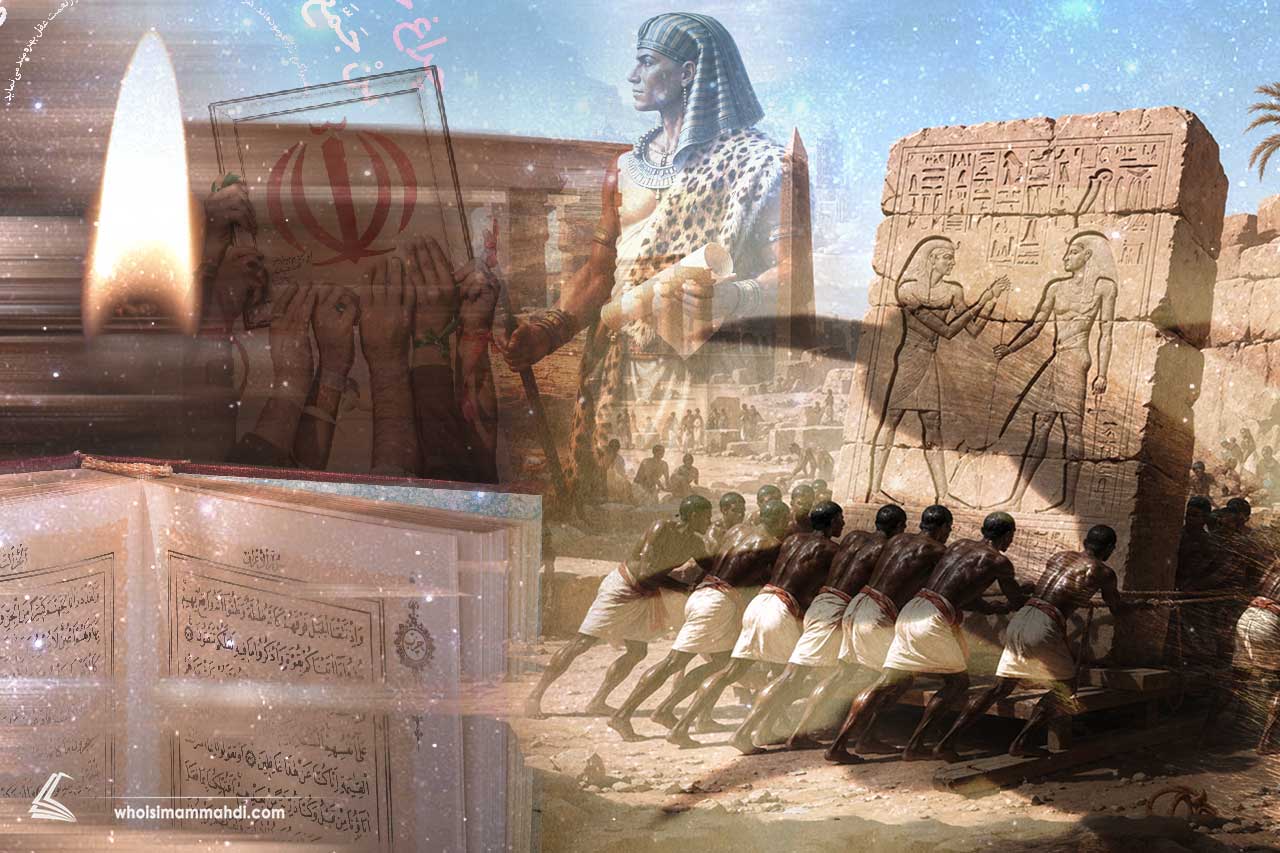
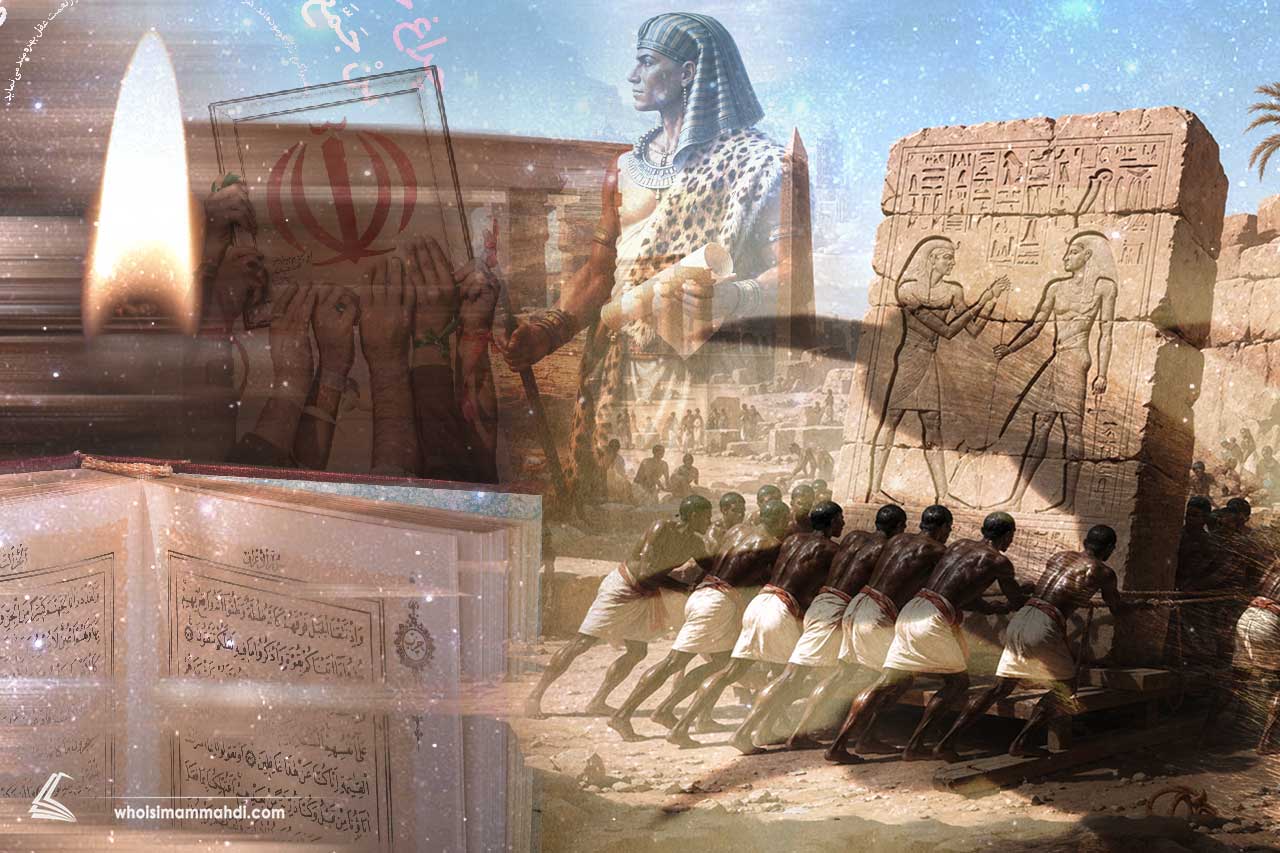
In the Quranic account, the oppression of the Israelites involved the deliberate weakening and subjugation of a particular community. Historical accounts indicate that Pharaoh economically exploited the Israelites. Deprived of basic rights, they were allocated only enough resources to survive, labor, and pay taxes, and were humiliated as second-class citizens.
By murdering their newborn sons, Pharaoh systematically dismantled the nation’s youthful defensive strength, effectively crushing any potential for early uprising. The Quran explicitly references these tragic conditions, reminding the Israelites of God’s salvation (Quran 2:49).
Infanticide and the Fear of a Savior
Driven by his astrologers’ prophecy that an Israelite child would cause his downfall, Pharaoh ordered the slaughter of pregnant Israelite women, resulting in the deaths of over twenty thousand children in his quest for Moses, a policy that clearly demonstrated the regime’s deep fear of structural change (Al-Majlisī 285). As stated in the Quran: “Indeed Pharaoh tyrannized over the land, reducing its people to factions, abasing one group of them, slaughtering their sons, and sparing their women. Indeed, he was one of the agents of corruption” (Quran 28:4).
The regime anticipated that a child born among the Israelites would ultimately threaten Pharaoh’s sovereignty. Pharaoh’s actions sought to annihilate the potential of future generations. By aiming to sever the lineage leading to the savior’s emergence and prevent any alteration of Egypt’s political destiny, Pharaoh employed genocide to crush any attempt at rebuilding the subjugated community.
Traditions suggest different timeframes for the years preceding the birth of Prophet Moses, but it is clear that the Israelites endured many years of severe forced labor and infanticide (Gen. 15:13; Exod. 12:40). As their elders passed away naturally and their youth were executed, the community faced the existential fear of total extinction.
Societal Despair and the Prelude to Deliverance
In this environment, the Israelites endured a harsh, bitter, and anxiety-ridden existence. Yet, despite this severe oppression, the hope for salvation remained alive, rooted in divine promises and the legacy of past prophets.
During this period, the Israelites experienced a profound transformation from a relatively honored and protected community alongside Joseph to a pressured collective under Pharaonic rule. This dramatic change set the stage for the emergence of Prophet Moses, commissioned to save the Israelites and alter the course of history.
The pinnacle of this phase in the Quran is found in the divine promises given to the mother of Moses: “We revealed to Moses’ mother, [saying], ‘Nurse him; then, when you fear for him, cast him into the river, and do not fear or grieve, for We will restore him to you and make him one of the apostles” (Quran 28:7). This verse is the key to salvation and preservation of Moses’ final mission, which ultimately challenges the established Pharaonic order and establishes the life of a monotheistic civilization.
Conclusion: Eternal Lessons in Divine Deliverance
The story of Prophet Joseph proves that an authentic divine civilization rests upon four fundamental pillars: monotheism, purity and ethics (the self-restraint of officials), knowledge and expertise (knowledge-based management and foresight), and social justice (equitable resource distribution during crises).
The civilization-building discourse in Prophet Joseph’s narrative and the subsequent transition to the era of Prophet Moses reveal a fundamental Quranic truth: Material powers and civilizations, no matter how outwardly imposing, remain ultimately subject to the divine will. This historical trajectory proves that when an oppressed community reaches a state of profound distress and turns sincerely to God, the oppressor’s power shatters, initiating salvation. With unparalleled wisdom, God nurtures the future deliverer within the very heart of the oppressive political order, demonstrating that His will operates far beyond all material and political structures.
In today’s world, faced with moral turbulence, structural oppression, and human crises, this teaching reminds us that escaping subjugating systems depends entirely on returning to monotheism and offering sincere supplication to God, the Almighty. In Shia theology, awaiting the Savior must not be a mere dream; it requires grasping the existential distress of the Promised Savior. It demands understanding the Savior’s longing and realizing that God’s absolute power manifests at the very peak of despair to alter the course of history and reclaim human dignity.
Works Cited
Al-Majlisī, Muḥammad Bāqir. Hayat al-Qulub, Vol. 1: Stories of the Prophets. Translated by Sayyid Saeed Akhtar Rizvi, Ansariyan Publications, 2003.
Chittick, William C. The Self-Disclosure of God: Principles of Ibn ʿArabī’s Cosmology. SUNY Press, 1998.
Chittick, William C., and Sachiko Murata. The Vision of Islam. I.B. Tauris, 1996.
Hoffmeier, James K. Israel in Egypt: The Evidence for the Authenticity of the Exodus Tradition. Oxford University Press, 1996.
Kitchen, Kenneth A. On the Reliability of the Old Testament. William B. Eerdmans Publishing, 2003.
Mughniyya, Muḥammad Jawād. Tafsīr al-Kāshif. Dār al-Jawād, 1990.
The New Oxford Annotated Bible with the Apocrypha: New Revised Standard Version. 5th ed., edited by Michael D. Coogan et al., Oxford University Press, 2018.
Qarai, Ali Quli. The Qur’an with a Phrase-by-Phrase English Translation. 6th ed., 5th rev. ed., ICAS Press, 2018.
Redford, Donald B. Egypt, Canaan, and Israel in Ancient Times. Princeton University Press, 1992.
Shirazi, Nasser Makarem. Tafsīr Nemouneh. Vol. 16, Dār al-Kutub al-Islāmiyyah, 1995.
Tabataba’i, Sayyid Muhammad Husayn. Al-Mīzān fī Tafsīr al-Qur’an. Vols. 1 and 16, Mu’assasat al-A‘lamī li-l-Maṭbū‘āt, 1997.