The Role of Crying Out to God and Urgent Prayer (Istighatha) in Individual and Collective Relief in the End Times
The world today stands at a critical juncture in history. Decisive battles between the fronts of truth and falsehood, economic pressures, moral crises, and psychological anxieties indicate that humanity is facing a multitude of simultaneous crises. The crucial question in such circumstances is: What is the way out of these dead ends?
In response to this question, the Holy Quran, alongside calling for effort, prudence, and perseverance, points to a fundamental factor that is often overlooked in sociological analyses: crying out to God and urgent prayer.
Over the centuries, humanity has created numerous tools to solve problems, ranging from complex military and media technologies to economic and political networks. However, experience has shown that these tools alone do not guarantee a way out of major crises. Sometimes, exactly when people feel everything is under their control, they come to harm from where they least expect it. This is because excessive reliance on material power and solutions distracts them from the true axis of power, which is trust in God. At these dead ends, human weakness and limitations become apparent, and this awareness is the factor that can lead humanity to the essence of fervent prayer.
In dead ends where material equations fail and everything is seemingly destroyed, one must ask: Is there a path beyond economic and military equations? Can a true hope be found?
According to the divine paradigm of victory, human efforts as well as scientific and economic tools are necessary, but they are never sufficient. Just as we need planning, equipment, and calculations for achieving victory, sincere tears, collective prayers, social unity, and even a courageous presence on the battlefield play a decisive role in this path. A part of divine assistance is manifested precisely through this solidarity and collective fervent prayer, a factor that has altered the equation at many historical turning points.
There are many clear examples of this divine law throughout history as well. Consider the story of the people of Prophet Jonah (Peace Be Upon Him), who were saved through collective urgent supplication, or the prayer of Prophet Jonah (PBUH) in the depths of darkness, which are examples of deliverance from an absolute dead end. These examples prove that urgent prayer, in addition to being an individual spiritual act, is also an effective social strategy which can lead to relief even in the crises of the End Times.
Tearful Supplication in the Quran: From the Dhikr Yunusiyah (Prayer of Jonah) to the Salvation of His People
To explain and clarify many divine laws, the Holy Quran does not solely rely on theoretical explanations; rather, by utilizing real historical accounts, it illustrates these traditions through objective experiences. One of the clearest examples for understanding the truth of crying out to God for help and fervent prayer is the story of Prophet Jonah (PBUH) and the story of his people. In these two Quranic narratives, both individual and collective fervent supplication are represented, and in both cases, the outcome is relief and salvation by divine will in a moment of desperation. The main message of these stories is that when apparent worldly means reach a dead end, heartfelt prayer can change destiny and pave the way for the divine assistance.
Prophet Jonah (Peace Be upon Him) in the Darkness: An Urgent Prayer from the Depths of Despair
After years of inviting his people to the truth, Prophet Jonah (Peace be upon him) left them when faced with their ignorance. Then, by divine will, he fell overboard and was swept out to sea and swallowed by a whale. The Quran describes this situation as follows: “Then he cried out in the darkness” [1].
Commentators have identified three layers to this darkness: the darkness of the night, the darkness of the sea, and the darkness of the whale’s belly [2]. Under such circumstances, there was no natural way of rescue, and all apparent means had vanished. This kind of situation brings a person to the point where the need for a genuine, urgent prayer rises within them—when they let go of every other source of help and turn to God alone.
The prayer that Prophet Jonah (PBUH) uttered in that moment, known as the Dhikr al-Yunusiya (Prayer of Jonah), was: “There is no god except You; You are immaculate! Indeed, I have been among the wrongdoers” [3].
Three fundamental truths are gathered in this prayer: monotheism, the glorification of God, and an honest confession of one’s own faults and shortcomings. This very detachment from everything other than God and a complete return to Him is the essence of tearful supplication in a state of distress. The Quran states the result of this fervent supplication as follows: “So We responded to him and delivered him from the agony” [4]. It then turns this experience into a universal rule: “And thus do We deliver the believers.” This means that this salvation was not exclusive to Prophet Jonah (PBUH), but serves as a model for all believers in moments of desperation.
The People of Prophet Jonah (PBUH): The Power of Collective Urgent Prayer
Alongside the mentioned individual example, the Quran also presents a rare instance of collective fervent prayer. When the signs of divine punishment became apparent to the people of Prophet Jonah (PBUH), they did not persist in denial. Instead, they turned to God through public repentance [5].
It is narrated in some exegetical sources that upon seeing the signs of the divine punishment, the people resorted to weeping and wailing. To foster a state of tearful supplication they separated the women, men, and children so that the cries and lamentations of each group would compel the others to urgent prayer [6] and crying out to God for help. The result was miraculous: The divine punishment whose signs had appeared was lifted from them, and the destiny of a society was altered.
These two Quranic narratives demonstrate that tearful supplication sometimes take place in the solitude of an individual and sometimes on the gathering of a society, and in both cases, they can pave the way for a change in destiny and the descent of God’s help. Therefore‚ heartfelt prayer is not merely an individual act of worship; rather, it is a social capacity that can present a path to salvation and relief for society amid crises and major dead ends.
Tearful Supplication and Crying out to God for Help in the Age of Crises
A close look at today’s world conditions reveals that people live in an environment fraught with tension and crisis in different aspects. A series of wars of attrition, economic pressures, the spread of moral crises, and an increase in feelings of anxiety, distrust, and psychological insecurity indicate that people have agitated and complex individual and social lives.
According to some thinkers, this state of the crisis-stricken world is not merely the result of a series of political or economic conflicts. Rather, it is a symptom of the clash between two perspectives on humanity and the world: one perspective that measures human value and capability solely by material tools, wealth, and power, and another that assigns a decisive role to spirituality, justice, and connection with God.
Reviewing the experiences of civilizations also demonstrates that possessing military power or technological advancement alone does not guarantee a society’s comprehensive sustainability. In numerous instances, societies that were very powerful in terms of tools and resources have faced decline or collapse due to their moral and social crises. These historical experiences show that although material tools and capacities are essential, they alone cannot guide a society through all major crisis.
The Holy Quran draws humanity’s attention to a deeper dimension of confronting hardships. According to Quranic logic, many pressures and difficulties are just for awakening of the hearts and activating a state of tearful supplication [7]. Crying out to God for help means turning to God honestly and humbly when a person realizes their own limitations and inabilities. Meanwhile, urgent prayer is the request for help in a moment of desperation, when an individual or society realizes they cannot overcome the crisis without divine assistance.
However, this perspective by no means implies abandoning effort and prudence. Religion teaches us that individuals should plan, apply reason, and utilize material capacities. Meanwhile, they must acknowledge that not all factors are in their control. This truth becomes clear within the framework of the law of decree and destiny (Qada and Qadar); decree refers to providing the conditions and causes, and destiny refers to the result. Accordingly, crying out to God and heartfelt supplication can be considered part of those effective causes which bring about divine assistance.
Prayer and making effort are not two separate or parallel paths; rather, they are two complementary parts of a single process. Human effort activates the capacities; tearful, urgent prayer establishes a connection with the source of divine power. When these two come together, new horizons emerge to overcome crisis; these horizons are invisible within the framework of purely material calculations.
For the same very reason, in a world that many view solely as a battlefield of competing material tools and powers, another layer is also at play; this layer is related to hearts, intentions, and humanity’s relationship with God. At this level, the destiny of societies is not determined merely by the extent of their material strength, but is shaped by their level of faith, justice, spirituality, and connection with God.
Tearful, Urgent Prayer in Today’s Life
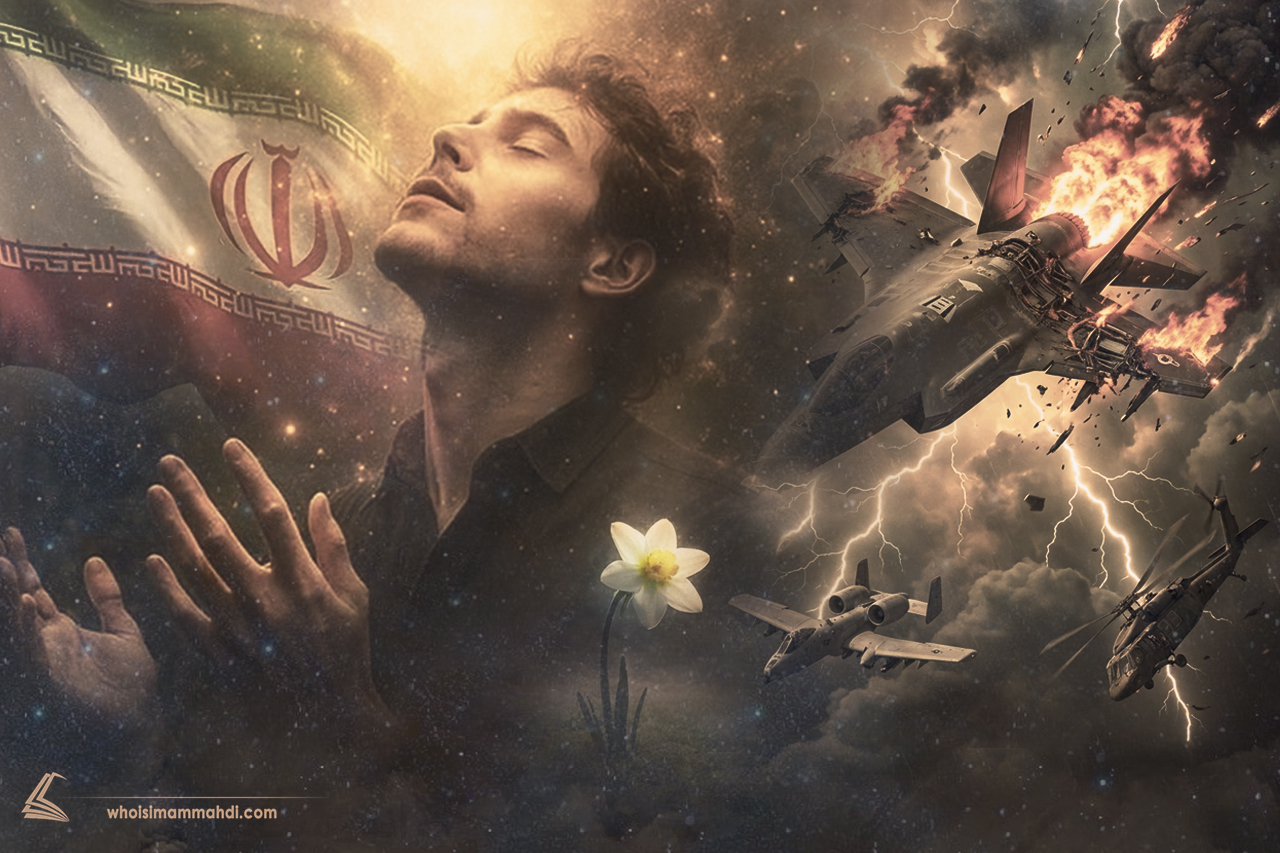
What is occurring today in the Middle East, particularly in the Ramadan War (The imposed war by the Zionism and the US to Iran on Ramadan month), is not merely a military conflict over geographical control or tools of power. Rather, it is a clash between two fundamental outlooks: on one side, the logic of absolute reliance on technology, equipment, and human calculations; on the other, the logic of faith, steadfastness, and reliance on connection with God and His deputy (the infallible Imam).
In such an arena, it is evident that tools and military experience play a role. But both divine law and the lessons of history show that relying on worldly power alone—without a deep sense of need for God—can never decide the outcome of great battles. Whenever hearts become overly attached to material means and tearful supplication is weakened, that is precisely where the front of truth is deprived of the blessing of divine assistance, even if the apparent signs are in its favor.
As mentioned earlier, divine law in times of great deliverance rests on the combination of two things: action and tearful, urgent prayer. A clear historical example is the experience of the people of Prophet Jonah (PBUH); a society on the verge of punishment alters the course of destiny through collective supplication and seeking God’s help; the combination of action and heartfelt prayer is the true paradigm of influence in the world. Humans are commanded to strive, plan, and resist, but the hidden half of this equation becomes active when the heart detaches from absolute reliance on material means, and true desperation is forged within the individual and society.
This same logic can be applied on the issue of waiting for the Promised Savior (Intizar). Lots of crisis are observed during the era of occultation because the occultation of the Imam of the Time (May God hasten his advent) signifies the world’s deprivation of the manifest presence of divine guidance, justice, and guardianship. Therefore, tearful supplication for his advent is not about some distant future; it is a strategy for addressing the problems of today. Whenever people or communities trace their problems back to the occultation of Imam Mahdi (Peace be upon him), tearful, urgent prayer no longer remains a momentary impulse—it becomes a sustained practice.
Real victory in major arenas happens when struggle, resistance, and real effort are accompanied by heartfelt supplication. Just as effort and planning are part of reaching the destined victory, tearful supplication is part of reaching the destined help from God. And when this divine law comes into play, it can reshape the path of a person and an entire society.
To take this path beyond slogans and bring it into everyday life, it can be practiced on three levels. The first is the individual level: every daily activity—from scientific and media work to one’s occupation and regular acts of worship—must carry two elements: action and tearful supplication. When this state continues, tearful prayer and seeking God’s help gradually become a disposition (malakah) in a person’s character.
The second is the familial level, where the home can become a center of hope and prayer—a place where problems are examined and addressed with an eye toward divine relief, and where a sense of deep need for God remains alive within family relationships.
At the social level, understanding the necessity of fervent supplication and its connection with resistance can make grassroots movements deeper and more enduring. When these three levels align with objective and practical efforts, society becomes more strong in crisis, and it will be guided toward a greater relief, which from a religious perspective, is intrinsically linked to the advent of the Savior and the realization of ultimate justice.
In today’s crisis-stricken world, tearful, urgent prayer is part of the divine mechanism for overcoming dead ends and activating divine assistance. What determines the course of societies is not merely material tools and calculations, but the connection between effort, steadfastness, and a state of desperate need for God’s help. Wherever this connection is established, even the severest crisis ends with relief.
References
[1]. Quran, 21: 87
[2]. Allamah Tabatabai, Tafsir Al-Mizan, vol. 14.
[3]. Quran, 21: 87
[4]. 21: 88
[5]. Quran, 10: 98
[6]. Sheikh al-Tabarsi, Majma’ al-Bayan fi Tafsir al-Quran. vol. 11.
[7]. Quran, 6: 42